
By Doreen Colondres

By Doreen Colondres
Spain knows its way around fire. From centuries-old wood-fired ovens to roaring grills and glowing vine shoots, meat across the country tells a story of place, tradition, patience—and an enormous respect for the ingredient.
Say “Spanish meat” and chances are one word immediately comes to mind: “jamón y chorizo”. And yes, we could happily talk about jamón all day—not to mention the treasures pulled from the waters surrounding most of the Iberian Peninsula. But look beyond the country’s most famous icons and you’ll discover that Spain has so much more to bring to the table.
Travel across the country and meat can tell you exactly where you are. In Castilla y León, suckling pig and lamb slowly roasting in wood-fired ovens speak of generations of tradition. Head north to the Basque Country and an impressive “txuletón” hitting the grill becomes almost a ritual. In Galicia, native cattle are deeply connected to the lush landscape, while in Castilla-La Mancha, Manchego lamb reflects the region’s centuries-old pastoral traditions. Farther south, Retinta cattle thrive under an entirely different sun.
And in wine country? Even the vines get involved. Best companions ever!
But keep one thing in mind: this is the uniqueness of Spain. Different animals, climates, landscapes, and traditions, yet one philosophy connects them all: value the ingredient, respect where it comes from, honor the tradition and the hands behind it—and know when to let fire do the rest.
Tostón or Cochinillo? Let's Start in Castilla
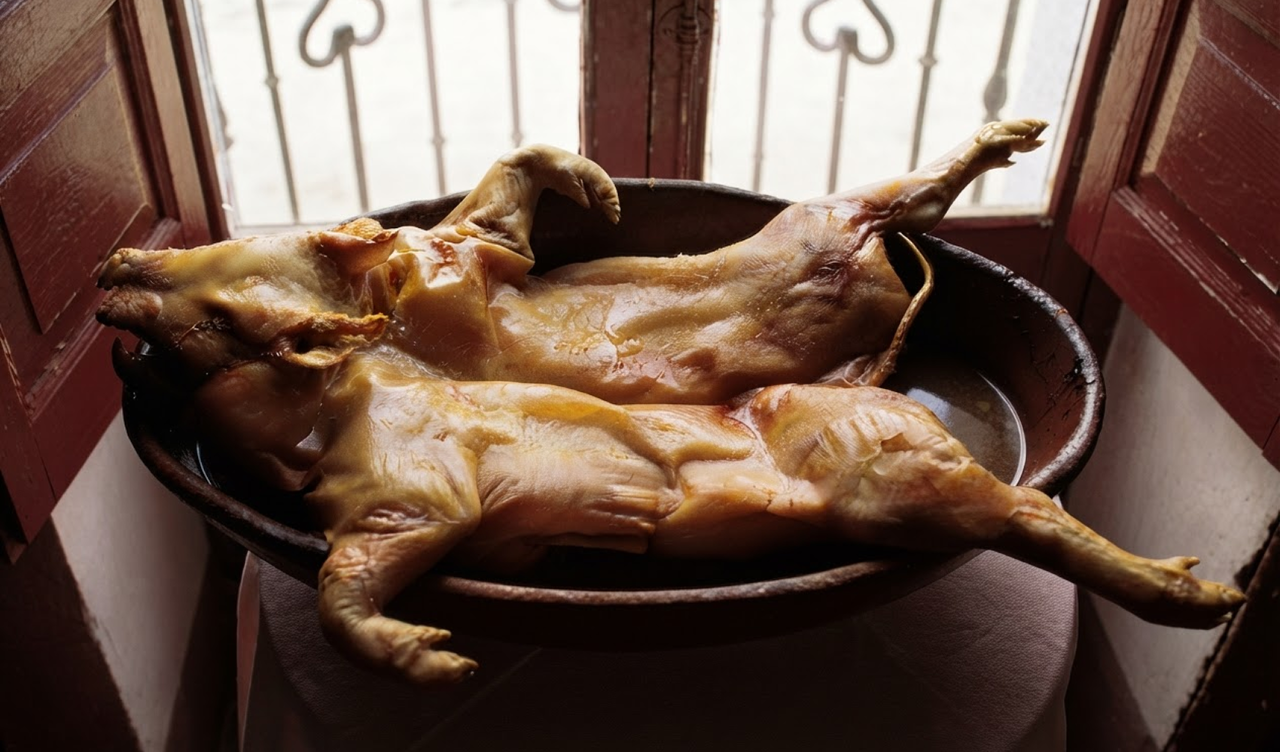
Few things announce a Spanish celebration quite like a whole suckling pig arriving at the table, its skin beautifully golden and crisp, the meat beneath incredibly tender.
Welcome to Castilla y León, where roasting is not simply a cooking technique; it is part of the region’s culinary identity.
Two destinations are particularly famous for it: Segovia and Arévalo. In Segovia, the “cochinillo asado” is so deeply rooted in local culture that “Cochinillo de Segovia” has been protected under the EU’s PGI status since 2024. In Arévalo, Ávila, it goes by another name: “tostón”.
Both traditions celebrate simplicity: suckling pig traditionally roasted in an earthenware dish in a wood-fired oven until meltingly tender beneath irresistibly crisp skin. At the table, it needs little more than a light salad, fresh bread and those precious roasting juices for dipping. In Segovia, there is also a little ceremony: the “cochinillo” is famously cut with the edge of a plate to demonstrate its tenderness, before the plate is smashed on the floor for good luck.
Good luck, indeed—especially when it arrives with a bottle of Verdejo from DO Rueda or a Crianza Tempranillo from Ribera del Duero. Now that’s my kind of Spanish tradition.
Lechazo: One Lamb, Different Fires
Stay in Castilla y León because another fire is waiting.
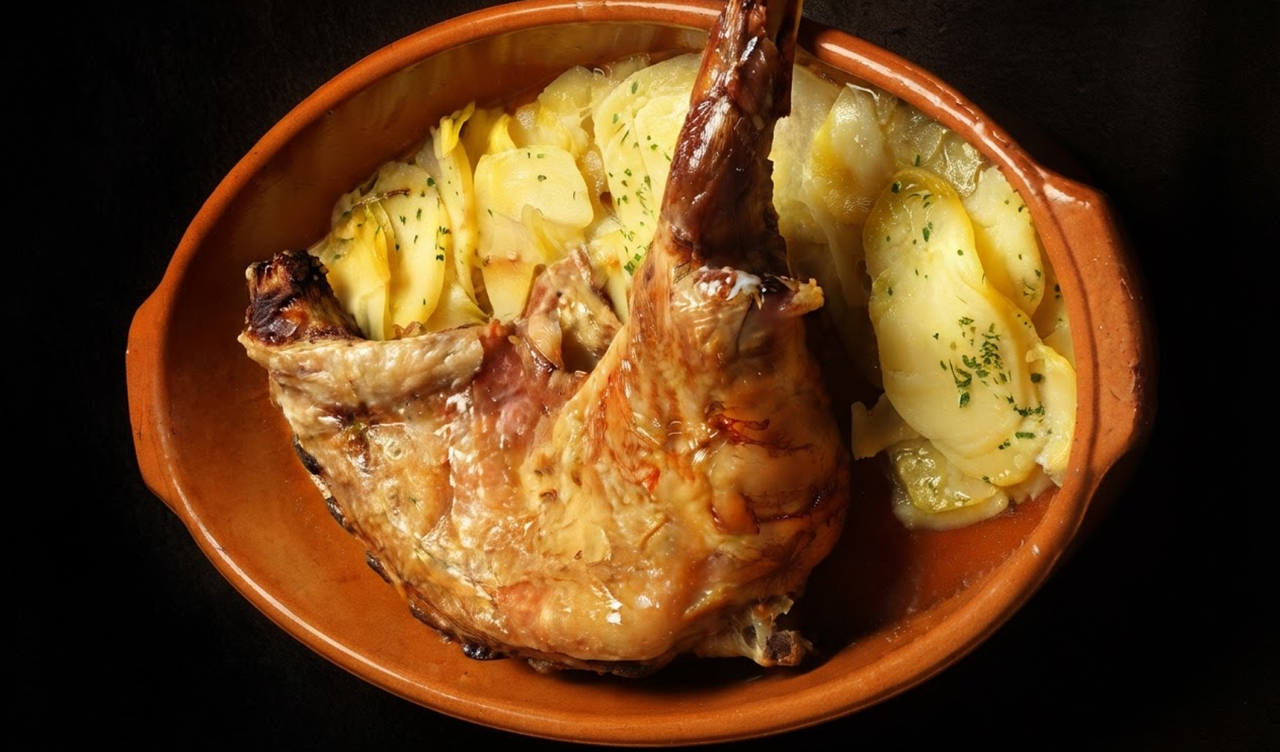
“Lechazo” means suckling lamb, and Lechazo de Castilla y León PGI has its own Protected Geographical Indication (PGI). Traditionally roasted in quarters in an earthenware dish inside a wood-fired oven, it needs little more than water, salt and time. The result is exceptionally tender meat that celebrates the delicacy of the lamb itself.
And in wine country? Even the vines get involved. Travel through Ribera del Duero and even into neighboring Rioja and you’ll find “chuletillas al sarmiento”—tiny suckling lamb chops cooked quickly over the intense embers of dried vine shoots. A completely different expression of lamb and fire, deeply connected to the vineyard landscape.
And naturally, all that fire leaves us with the same question: what are we pouring?
In places such as Aranda de Duero, lechazo and Ribera del Duero seem almost destined to meet. Depending on the season, local artichokes, leeks, asparagus or wild mushrooms such as boletus and níscalos might start the meal—or perhaps some morcilla for those hungry enough to get a head start. Then comes the tender roasted lamb alongside the structure and fruit of a local red, one of those combinations that reminds us why regional food and wine traditions so often belong together.
Sometimes the best pairing advice is simply to fill your glass with the wines of the region you’re in. For this dish, though, I’m reaching for a Crianza—and perhaps even a Reserva.
And Castilla y León doesn’t have Spain’s only protected lamb tradition. Travel south into Castilla-La Mancha and you’ll find Cordero Manchego PGI, another example of how local breeds, landscapes and centuries of pastoral tradition give Spanish lamb a distinct sense of place.
Txuletón: Size Matters
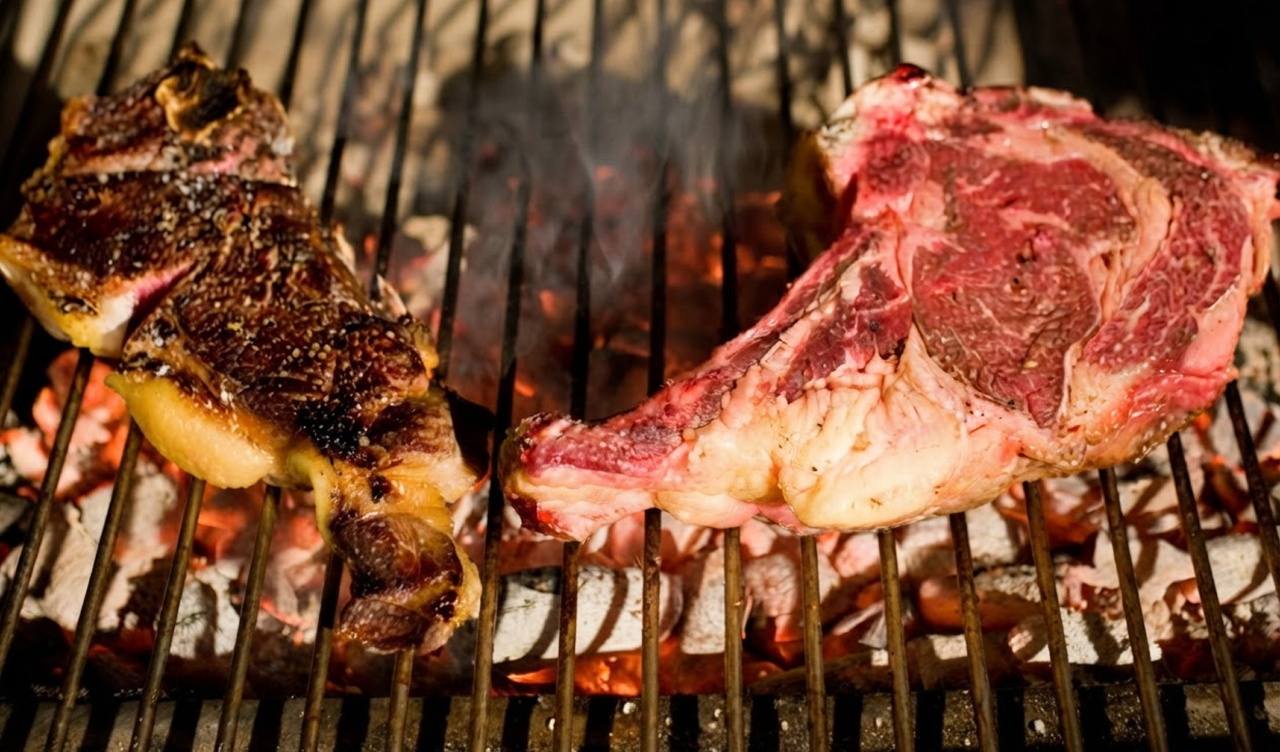
Then we arrive in the Basque Country, we need to roll the red carpet for the “txuletón”. First, an important distinction: “txuletón” is not a breed of cattle. It is the Basque spelling of chuletón—which literally means a large chop. In this case, we’re talking about an impressive, thick-cut beef chop, usually served bone-in. And a great one needs very little: excellent beef, intense heat, salt and someone who truly understands the grill.
The outside develops a beautiful sear while the center remains dramatically red and juicy. And yes, size is part of the experience. Add some Padrón peppers on the side, but please, do not overcook the meat.
Across the country, native cattle breeds, protected meats and dramatically different landscapes give beef a strong sense of place.
In green Galicia, Rubia Gallega is one of the region’s celebrated native breeds. It should not be confused with Ternera Gallega PGI: Rubia Gallega is a breed, while Ternera Gallega is a Protected Geographical Indication that can include it. Rubia Gallega beef is prized for its rich flavor, juiciness and tenderness, with mature animals capable of developing beautiful marbling and remarkable depth of flavor.
Travel to Castilla y León and another protected name appears: Carne de Ávila PGI, closely associated with the native Avileña-Negra Ibérica breed and its extensive grazing traditions.
Then head south and the landscape changes completely. Retinta, with its distinctive reddish coat, is a native breed deeply associated with the warmer, drier landscapes of Andalucía and Extremadura. In Cádiz, where atún rojo de almadraba may steal much of the attention, Retinta reminds us that the southern Spanish table doesn’t end at the sea.
In parts of Cádiz, the connection to the landscape becomes almost surreal: Retinta cattle graze so close to the Atlantic that they can even be spotted wandering the sands of beaches such as Bolonia. Having lived in the region, I can tell you that with a sensitive palate, a subtle salinity can sometimes come through in the meat. Talk about terroir!
Different cattle, different landscapes, different traditions—but the same invitation to look beyond the cut and ask: What animal is this? Where did it come from? How was it raised? Impossible to replicate out of Spain!
Ibérico: More Than Jamón and Chorizo
Of course, we cannot talk about Spanish meat without Ibérico. But this time, let’s leave the dry-cured jamón hanging for a moment.
The Ibérico pig is a native Spanish breed historically connected to the dehesa of the southwestern Iberian Peninsula. And its fresh meat deserves attention of its own. Beyond the prized cuts destined for dry-curing, there is an entire world of fresh Ibérico pork waiting for the grill and the kitchen: Ibérico pork meat.
Chops, presa, secreto, pluma, loin and cheeks. Thanks in part to its characteristic intramuscular fat, Ibérico can deliver remarkable richness, juiciness and flavor with very little intervention. The result can be ridiculously delicious. Yes, close your eyes and add a glass of Rufete, Garnacha or Tempranillo.
As consumers, however, there is an important distinction to understand: Ibérico describes the breed, but not necessarily how pure the Ibérico genetics are, how the animal was raised or what it was fed. Fresh Ibérico pork and acorn-fed fresh Ibérico are not automatically the same thing. Look for information about breed, feeding and farming, particularly pigs finished on acorns during the montanera—the acorn season—because what happened before the meat reached your kitchen matters.
For most of these cuts, a hot grill, salt and respect for the product can do the rest. The cheeks are a different story. They love slow cooking and are wonderful braised with wine, potatoes, herbs and vegetables such as carrots.
Jamón may have introduced the world to Ibérico, but it certainly doesn’t have to be the end of the conversation.
More Than Jamón
From wood-fired suckling pig and lamb to enormous “txuletones”, native cattle and fresh Ibérico, Spain gives meat a remarkable sense of place.
And thankfully, we don’t always need a plane ticket to experience it. Many of these Spanish meats and cuts can now be found online or at specialized Spanish grocery stores, ready for our own grills and ovens.
But as these products become easier to find, knowing what we are buying becomes even more important. Read the labels, look for the official PGI or other protected-designation seals when applicable, check the breed and origin, and pay attention to how the animal was raised and fed. Similar names or appearances don’t necessarily mean the same product. Authenticity matters—not only for flavor and quality, but also for supporting the farmers, producers and traditions behind them.
And remember: these traditions are only part of the story. Native breeds, landscape, climate, diet and generations of knowledge create an identity that belongs to these places—and simply cannot be replicated anywhere else in quite the same way.
So yes, let’s continue celebrating Spain for the jamón. Just don’t stop there!