By Richard Cornish, food-and-drink journalist,
.png.transform/rendition-xs/image_image%20(1).png "Feder")

By Richard Cornish, food-and-drink journalist,
It is one of the world’s most affordable everyday luxuries. Spanish extra virgin olive oil. Grown and made in the Spanish countryside, it is the highest-grade, purest olive oil, made from 100 per cent fresh olives. Extracted solely without the use of excessive heat or chemicals, it retains the natural aroma, flavour and texture of the fruit, along with antioxidants associated with good health.
The basis of Spain’s famous culinary culture, Spanish extra virgin olive oil is exported to more than 160 nations, making it the most enjoyed olive oil in the world.
A completely natural product, harvested and processed under modern hygienic conditions, it is a food surrounded by layers of lore and tradition, with its foundations in antiquity. Spanish extra virgin olive oil is offered in many different formats, from affordable bottles sold in supermarkets to super-premium artisan labels—there is a Spanish olive oil for everyone.
The Harvest Begins
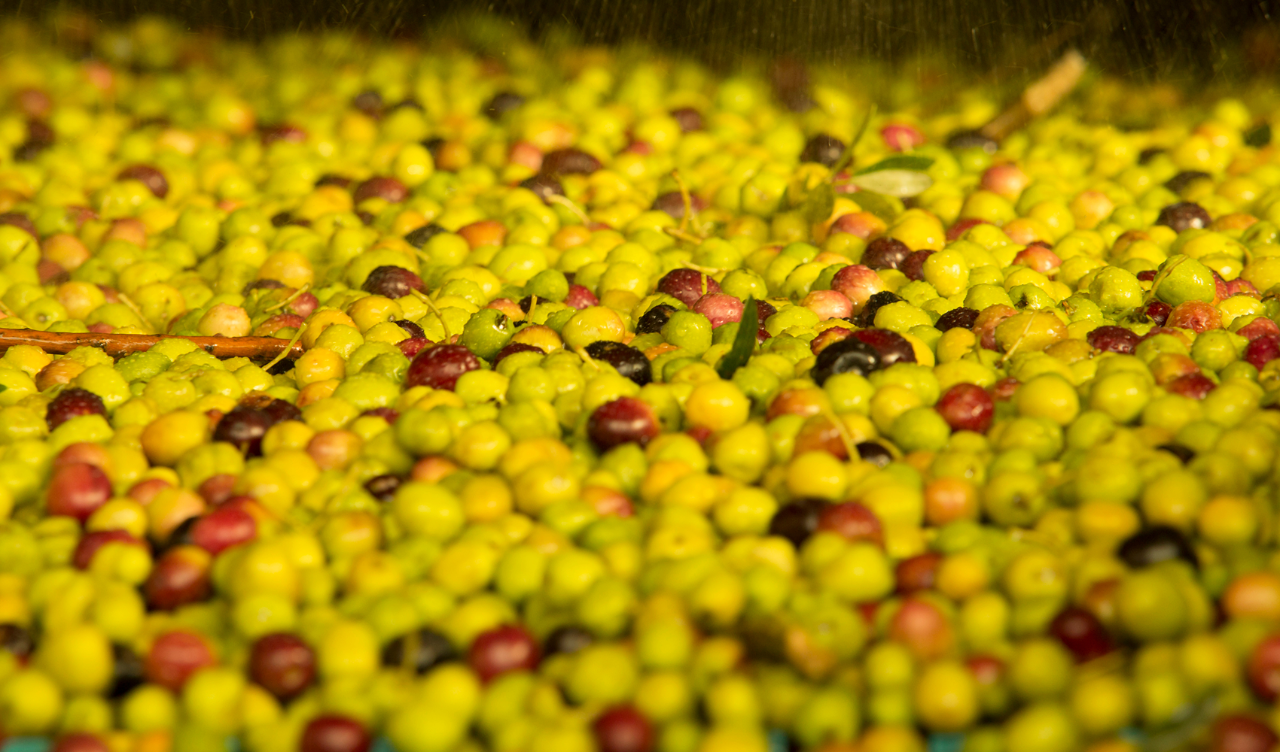
As the autumn sun rises over Andalusia, the olive harvest gets underway. Under the silver-green canopy of the olive trees that spread over the undulating hills of Spain’s sunny south, teams of harvesters and their machinery begin gathering in the new season’s ripe olives. The air is filled with the sweet aroma of fresh fruit and green leaves and trailers laden with freshly picked olives are quickly sent to nearby mills. Here the fruit is crushed within mere hours of harvest to release its fresh, aromatic oil.
Every year, from October to February, the largest olive oil harvest in the world takes place in Spain. There are around 350 million olive trees across the country, the majority in the sunny south, covering almost 2.8 million hectares. Production can vary in different years, with rainfall and temperature, but in recent years, Spain’s national annual olive oil production has weighed in at a staggering 1.72 million metric tonnes. That is roughly half of the 3.5 million tonnes of olive oil produced around the world each year.
While Spaniards use roughly 11–15 litres of olive oil per person each year, that in no way accounts for the amount the nation produces. Spain exports around 60 per cent of its olive oil production annually. The largest importer of Spanish olive oil is Italy, where some is bottled or used in blends sold under Italian brands. Spanish olive oil is appreciated in neighbouring France and Portugal, over the sea in the UK and across the Atlantic in the US, which imports around 180,000 tonnes of Spanish olive oil every year.
Spanish olive oil is savoured in kitchens in over 160 countries around the world and is a product recognised for its consistent flavour, quality and value.
Gastronomic Tradition
Olive oil is the lifeblood of Spanish gastronomy. It is the start of almost every savoury dish. It is used every day, from baking traditional breads and crafting pastries to creating artisanal canned goods. At home, it is used in almost every meal, in every household, every single day. Walk down a street in any suburb or country town and the mid-morning air is filled with the signature aroma of Spanish olive oil being heated for sofrito, forming the base of what will be that day’s main meal.
There are different olive oils for different requirements. A supermarket Spanish olive oil could be used in everyday dishes as simple as toasted bread rubbed with garlic and tomato, sprinkled with salt and drizzled with a little extra virgin olive oil to make perhaps the nation’s dish – pan con tomate or pa amb tomàquet in Catalan. Eat it on its own, drape it with a little jamón or punctuate it with a fat anchovy: it is a delicious snack in which the fruitiness and smooth texture of the olive oil matches the crunch of the grilled bread.
Then there are the high-end olive oils grown, harvested and pressed in the artisan style, with exquisite attention to detail from the style of the bottle to the artistic design of the label wrapped around it. At Madrid’s three-Michelin-starred DiverXO, for example, celebrity chef Dabiz Muñoz uses ultra-premium extra virgin olive oil from a grower in Trazmoz who cultivates the famous Farga olive, and hand-picks and presses the olives in the traditional manner.
A Nation Built on Olives
In the south of Tarragona, in the mountains by the old city of Ulldecona, is a grove of ancient olive trees. Gnarled and twisted, their great limbs cast vast umbrellas of dappled light. Some were planted in the mediaeval period. One tree, known as Farga de l’Arion, is one of Spain’s most remarkable olive trees. According to researchers at the Polytechnic University of Madrid, it was planted in AD 314, during the Roman occupation.
While olive oil production thrived and spread during the Roman period, olive trees were first introduced to the Iberian Peninsula by the Phoenicians 3,000 years ago. Archaeological evidence points to their use as food as early as about 100,000 years ago on the North African coast of Morocco, but it was the Minoans on Crete who mastered their cultivation and began trading olive oil both as a food and as a precious fuel for use in lamps.
Spain proved the perfect climate for olive trees as they like tough love. With silvery leaves and leathery bark olive trees prefer warm to hot summers and can handle cold, but not icy, winters. They favour limestone and other calcium-rich soils, especially when they are free-draining. In other words, olives love the climate and soils of Spain, particularly the warm, sunny south.
Water is the big variable in olive production. Too much water from frequent deluges or poor soil drainage can be fatal to olive trees – they hate ‘wet feet’, as farmers say. Late-summer or autumn rain can also damage the fruit, causing the olives to swell and their skins to split.
More than One Olive Oil
Picual
Picual is the most widely planted olive variety in Spain. Named after its pointed tip, or pico, it is native to Andalusia and most closely associated with Jaén. Tolerant of Andalusia’s hot climate, Picual produces a naturally stable and delicious olive oil and accounts for almost 50 per cent of Spain’s olive oil production.
When Picual olives are harvested young and green, they produce a full-bodied, intensely aromatic oil with distinctive notes of tomato leaf, freshly cut grass, green herbs, fig leaf and green almond. It can be peppery, with an assertive grip on the back palate and a long, clean finish. Use it to dress tomato and bitter-leaf salads, finish grilled lamb or drizzle over gazpacho.
As Picual ripens, its oil becomes softer and sweeter, expressing aromas of ripe tomato, black fig and crushed almond. Ripe Picual oil has less pronounced pepperiness and a rounder flavour, suiting slow-roasted vegetables and bean stews. It can even be used in cakes and baked desserts made with almond meal, such as the famous olive oil and almond cake.
Cornicabra
This hardy variety gets its quirky name, meaning ‘goat’s horn’, from its curved shape. It has evolved to survive and thrive during the cold winters and hot, dry summers of Castilla–La Mancha. It is particularly suited to the elevated limestone country around Toledo and forms the basis of oils protected by the Montes de Toledo PDO.
When harvested green, Cornicabra produces a dense, structured oil with aromas of olive leaf, fresh herbs, green apple and green almonds. It has a mildly bitter grip and a distinctive peppery warmth that lingers on the palate. Drizzle it over grilled or barbecued red meat or a roasted capsicum salad, or use it to finish chickpea braises.
Riper Cornicabra fruit produces a silky oil with a round, smooth mouthfeel and abundant aromas of ripe red apple and lightly roasted almond. Even when ripe, Cornicabra retains its structure, body and lingering finish. Use it to finish sautéed mushrooms with thyme, drizzle it over carved roast poultry, or pair it with Manchego or other mature sheep’s-milk cheeses.
Lechín de Sevilla
Lechín de Sevilla thrives in the poor, shallow soils and dry conditions of Seville, Cádiz and neighbouring parts of western Andalusia, where less hardy cultivars struggle. Its name is thought to refer to the pale, milky appearance of the olive’s flesh or juice.
When picked green, Lechín de Sevilla produces a rich oil with aromas of olive leaf, freshly cut hay and green almond. Its moderate bitterness and peppery finish work well with its smooth mouthfeel. It is perfect with sardines fresh from the grill or drizzled over a chickpea salad garnished with fresh parsley. Fresh, green Lechín de Sevilla also works beautifully with a savoury salad of sliced orange, ripe olives and red onion.
When the olives are allowed to ripen, the oil becomes even smoother and more unctuous, with sweet, nutty notes of warmed almond and even ripe apricot. Its touches of warmth and bitterness are less pronounced but still add structure. This soft, rich oil enhances a salad of finely sliced fennel or a warm dish of roasted pumpkin and hazelnuts, and can be used to finish a plump roast chicken.
Hojiblanca
A variety associated with Córdoba and Málaga, Hojiblanca literally means ‘white leaf’. It is a dual-purpose olive, valued both at the table and at the mill, where it is crushed to produce wonderfully complex oil.
Early-harvest Hojiblanca can be aromatic and complex, with notes of freshly cut grass, artichoke, green apple, tomato leaf and green almond. It can begin sweetly before developing marked bitterness and a pleasant peppery finish. Use it with grilled spring vegetables such as artichokes, asparagus or broad beans; use it to finish salmorejo, the classic cold tomato soup; or pair it with oily fish.
As the fruit ripens, the oil becomes rounder and more delicate, with flavours of ripe apple, sweet almond and even ripe berries. Ripe Hojiblanca pairs perfectly with roast pork and creamy vegetable soups, while its fruit notes make it an excellent ingredient in flourless orange or almond cakes.
Arbequina
These small, compact olives are named after Arbeca, a rural town in the province of Lleida in Catalonia. Arbequina olive trees have long been cultivated across Catalonia and neighbouring Aragón, although their compact growth and early fruiting have made the variety popular in modern high-density groves throughout Spain.
When harvested green, Arbequina produces a fresh, aromatic oil with notes of green apple, cut grass, green banana and almond, accompanied by mild bitterness and a peppery finish. Use it to dress delicate leaves, finish grilled prawns or drizzle over young cheeses and fresh curd.
Fully ripe Arbequina develops fragrant notes of ripe apple, banana, sweet almond and tropical fruit, along with a smooth, buttery texture. With little bitterness, delicate pepperiness and a round, almost sweet finish, its mild flavour makes it ideal for making real egg mayonnaise, poaching delicate seafood and even baking cakes and biscuits.
Manzanilla de Sevilla
The name Manzanilla means ‘little apple’, describing the olive’s plump, rounded shape. Closely associated with Seville and the surrounding countryside, this is the classic green olive served in Spanish bars—cured, pitted or stuffed. While most of the crop is destined for the table, the fruit can also be pressed.
Green Manzanilla produces a fresh, light oil with aromas of green apple, grass, olive leaf and raw almond, accompanied by gentle bitterness and a clean, peppery finish. This makes it perfect for blending with a little sherry vinegar to make a vinaigrette. Consider drizzling it over grilled white fish or serving it with fresh goat’s cheese and green olives.
When pressed at a riper stage, Manzanilla de Sevilla yields a smooth, sweet oil with pleasing notes of ripe apple and almond, a soft texture and very little bitterness. Its relatively modest oil yield helps explain why it remains more closely associated with table olives. When you do get to use this delicious oil, try it in a silky homemade mayonnaise, pair it with grilled shellfish or use it in cakes flavoured with citrus.
Empeltre
Empeltre is an ancient variety associated with Aragón, particularly Zaragoza and Teruel, although it is also found along the Ebro Valley, in Catalonia and on the Balearic Islands. Its name comes from empelt, an old word for ‘graft’, reflecting the traditional practice of grafting the variety onto established rootstock.
Compared with the more customary ripe style, green Empeltre fruit produces a fresh, herbaceous oil with aromas of green almond, apple and leaves, accompanied by mild bitterness and pepperiness. Drizzle it over grilled vegetables or white bean salads, or over bread rubbed with tomato.
Because Empeltre ripens relatively early, it is often harvested when dark and mature. At this stage, it produces a golden-yellow oil with a velvety texture and soft aromas of ripe apple, sweet almond and mature stone fruit. It is characteristically delicate, with little bitterness or pepperiness and a mellow, rounded finish. Empeltre olive oil makes sensational alioli, brings out the flavour of poached or baked fish, and works beautifully in pastries and cakes where a gentle olive flavour is desired, such as Spanish tortas de aceite or a classic olive oil bizcocho.
Pride of Place
Spain’s olive oils speak clearly of place. In Europe, Protected Designation of Origin (PDO), known as DOP in Spanish, guarantees that a food product is produced within a defined region according to strict standards. It protects local varieties and traditions while allowing food lovers to taste the influence of landscape, climate and culture.
Priego de Córdoba, Andalusia
One of Spain’s most decorated olive oil regions, Priego de Córdoba produces fragrant, complex oils from Picudo, Hojiblanca and Picual olives. Expect fresh herbs, green apple and tomato, with gentle bitterness and a peppery finish.
Aceite del Bajo Aragón, Aragón
Empeltre makes up at least 80 per cent of this golden oil, with Arbequina and Royal playing supporting roles. It is softly fruity and gently sweet, with the warm, rounded flavour of fresh almonds.
Gata-Hurdes, Extremadura
Made entirely from the local Manzanilla Cacereña olive, these aromatic oils balance sweetness, bitterness and piquancy. Look for distinctive aromas of green apple, banana and freshly cut grass.
Les Garrigues, Catalonia
Arbequina is queen in the dry country of inland Catalonia. These oils are smooth, sweet and softly fruity, with suggestions of apple, banana and almond, making them particularly good with seafood and vegetables.
Aceite de la Comunidad Valenciana, Valencia
Made from a remarkable collection of local varieties, including Villalonga, Blanqueta, Farga and Serrana de Espadán, these balanced oils combine green olive and almond aromas with moderate bitterness and spice.
From Fruit to Fresh Juice
Towns in southern Spain are dotted with historic olive oil mills, or almazaras, open to the public. These are often found in historic centres, with old olive trees out the front and courtyards decorated with large millstones once used to grind the olives into a paste, and varas – the long poles traditionally used to beat ripe olives from the trees. These are mostly relics of the past, as harvesting and processing are now fast, modern and hygienic.
Olives are fruit and, once picked, will begin to lose their fresh flavour and bright aromas. In warmer conditions, the fruit deteriorates faster. The objective of the modern olive oil industry is to harvest the olives during the evening or in the cool of the morning and deliver them to the almazara as soon as possible. This involves modern machines that gently shake the trees to remove the fruit and specially designed conveyor belts that move the olives to holding trailers as carefully and gently as possible.
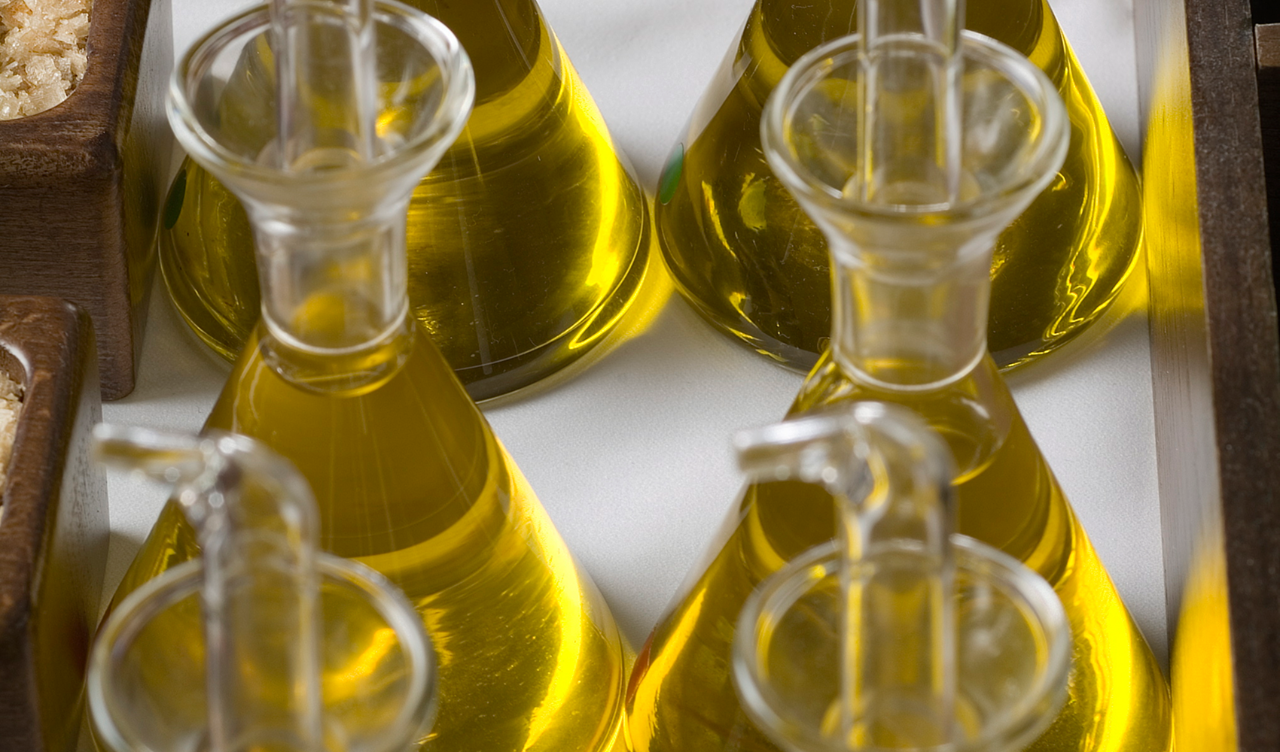
The olives are sent to the mill as soon as possible. Stray leaves are blown away – and often composted or processed into dry leaf for teas and tisanes. The olives are then washed to remove field dust and crushed in a mill to form a paste. The paste is pressed or spun to separate the oil from the water, and the oil is filtered and sent immediately to a stainless-steel tank.
Light, heat and oxygen are the enemies of fresh olive oil. They can make great olive oil flabby and, with enough exposure, render it rancid. Spanish oil producers have therefore developed technology to blanket the olive oil with inert gas, protecting it from oxidation.
The oil is bottled in dark green or brown glass to protect it from sunlight. Bulk Spanish olive oil is carefully shipped in airtight flexi containers to specially designed stainless-steel tankers.
Age-Old Art
While the bulk of Spanish olive oil is made using ultra-modern processes to maintain freshness and quality, some artisan producers maintain traditional harvesting methods. These are generally smaller, family-owned businesses that use the traditional method of vareo – beating the trees with sticks so the olives fall onto nets or sheets spread beneath them. Because these producers make small quantities, they are able to harvest and process the fruit at its peak without the use of modern machinery. These small artisanal brands can attract a premium.
Green vs Dark
All olives begin as small green fruit. As summer ends and autumn cools, they become plump and full of oil. If you ate a green olive straight from the tree, it would be hard-fleshed and intensely bitter. When olives are harvested green, they produce oils with a distinctive green character that can include notes of freshly cut grass, green tomato, artichoke, rocket, herbs and, depending on the variety, green almond or freshly sliced green apple. These oils can be assertive, with a peppery kick at the back of the throat. Their texture often feels lean, lively and clean rather than soft or buttery. Spanish varieties that may be harvested partly green include Picual, which can have that pepperiness; Arbequina, which can display notes of green apple; and Castellana, sometimes harvested early in Castilla-La Mancha to capture distinct green-grass aromas.
As the fruit ripens, the skin changes from green to straw-yellow and, depending on the variety, blushes red before deepening through purple to black. The flesh gradually softens, the proportion of oil rises and the flavours become rounder, sweeter and more generous. Oils pressed from riper olives can suggest ripe apple, banana, stone fruit, nuts or tropical fruit. They are generally milder, with less bitterness and pepper, and a broader, more buttery mouthfeel. Empeltre is one variety often left on the tree for a late harvest to develop full ripeness.
Healthy Oil
Good extra virgin olive oil carries the flavour of the fruit and a cargo of healthy compounds. Oleic acid, its principal monounsaturated fat, helps make it a better everyday choice than fats rich in saturated fat. Then there are polyphenols, antioxidants associated with protecting blood lipids from oxidative damage. They are sensed on the tongue and at the back of the throat as warmth and pepperiness—signs of their presence in the oil. Early-harvest oils, particularly robust Picual from Jaén, can be especially rich in these compounds. Polyphenol levels generally fall as olives ripen, although variety, growing conditions and milling all matter.
Spanish Extra Virgin Olive Oil in the Kitchen
There is an old Spanish saying: “La mejor cocinera, la aceitera”—the best cook is the olive oil container. The same can be said of kitchens around the world, where a dish can begin or finish with great olive oil. Use it to fry chopped vegetables for a sofrito or mirepoix, or as the base of a fragrant vinaigrette. Drizzled slowly into egg yolk and garlic, Spanish olive oil makes authentic aioli. It can be poured into a frying pan for shallow-frying, while its high smoke point makes it a practical choice for cooking. Brushed over steak before grilling, it helps prevent sticking and highlights the meat’s natural flavour. It also brings moisture and fragrance to dairy-free cakes. From first sizzle to final drizzle, Spanish olive oil brings the flavour of Spain to countless dishes. It is the natural choice.
Ten Ways to Use Spanish Extra Virgin Olive Oil
Spanish extra virgin olive oil is an essential ingredient in the modern kitchen. It can be the start of a slow-cooked braise or an aromatic dressing for a salad of fresh green leaves. It can be made into an emulsified sauce, used to confit meat or drizzled over a dish of fresh summer citrus. With more than 200 olive varieties grown across Spain, there is an oil for almost every occasion.
Breakfast toast: Make pa amb tomàquet by pouring Spanish olive oil generously over toasted bread rubbed with garlic and ripe tomato, then sprinkled with a little salt. Try soft, fruity Arbequina, which brings notes of apple, banana and fresh grass.
Dipping bread: A modern way to highlight great bread and excellent Spanish olive oil is to serve crusty bread with a shallow bowl of Spanish olive oil and sea salt.
Spanish vinaigrette: Place one tablespoon of Vinagre de Jerez DOP in a jar with a good pinch of salt and some black pepper, then add four tablespoons of Spanish olive oil. Screw on the lid and shake the jar vigorously until the dressing is thoroughly combined. Consider making this with fruity, nutty Blanqueta oil and pour the vinaigrette over salad leaves, tomatoes and raw asparagus.
Finish grilled seafood: Quickly cook fish, prawns, octopus or shellfish on the barbecue or a hot grill. Sprinkle with a little salt and drizzle with a Spanish olive oil such as delicate Blanqueta or grassy Hojiblanca, which has enough character for richer seafood.
Fry with it: Spanish cooks use olive oil to shallow-fry eggs for breakfast or deep-fry croquetas, patatas bravas, buñuelos and torrijas. Keep the oil at about 180°C so the exterior crisps before the food absorbs too much oil.
Make gazpacho: On a hot day, blend fresh tomato, cucumber, onion, garlic and capsicum with iced water, Vinagre de Jerez DOP and some day-old bread. Season with salt and pepper and dress with Spanish olive oil to make traditional gazpacho. Or make the tomato version from Córdoba called salmorejo. Peppery Picual stands up to ripe tomato, garlic and vinegar.
Dress roasted vegetables: Roast any vegetable in a hot oven and dress with Spanish olive oil and salt. Simple. Delicious. Consider escalivada – roasted capsicum, aubergine, onion and garlic drizzled with robust Ocal, with its notes of tomato, artichoke and green peas.
Bake with it: Replace butter with Spanish olive oil in sponge cakes, biscuits or bread flavoured with rosemary and Spanish olives. Mild Arbequina is especially versatile in baking.
Pair it with chocolate: Drizzle Spanish olive oil over a piece of dark chocolate on bread and add a few flakes of salt. Awesome! Or try chocolate mousse or ice cream drizzled with Changlot Real, whose aromas of citrus, almond and fig make it an intriguing choice.
Mix a cocktail: Spanish bartenders use Spanish olive oil in infusions and emulsions. Try a few drops of Picual in a dirty martini served with an olive, grassy Hojiblanca in a savoury cocktail or fruity Arbequina in a banana daiquiri. What could go wrong?