By Doreen Colondres
.png.transform/rendition-xs/image_image%20(1).png "Feder")

By Doreen Colondres
Small in size but enormous in personality, Spain’s beloved piquillo peppers are unique and impossible to imitate. They are sweet, smoky, delicate and incredibly versatile. From the fields of Navarra to the Spanish pantry, their story is one of fire, tradition and the beauty of keeping things simple.
Spain has an extraordinary talent for turning seemingly simple ingredients into something so memorable on the palate that they can become an obsession. Jamón. Olive oil. Conservas. A perfect tomato dressed with little more than salt. And then there is the piquillo pepper: small, bright red, slightly sweet, beautifully smoky and proof that sometimes the most seductive things in the Spanish pantry come in very small packages.
Open a good jar and you immediately understand the attraction. First, the color and the aroma; then, on the palate, these delicate scarlet peppers reveal a silky texture and an unmistakable roasted character. Their flavor is sweet, savory and gently smoky, with just enough acidity to keep you coming back for another bite.
And despite being a pepper, this little beauty is not really about heat. It is about flavor.
The name “piquillo” translates to “little beak,” a reference to its distinctive triangular shape and slightly curved point. But perhaps the most fascinating thing about the piquillo is not what it looks like. It is what happens to it between field and jar.
There is fire involved. And plenty of hands.
From the Americas to Navarra
Like so many ingredients we now consider essential to Spanish cooking, “Capsicum annuum” peppers came from the Americas, arriving in Europe following voyages to the New World. Over centuries of cultivation and adaptation, peppers became deeply woven into Spain's culinary identity.
Try to imagine Spanish cooking today without them. It would mean a world without “pimentón”, “ñoras”, “guindillas” or those gorgeous roasted peppers appearing at markets, tapas bars and family tables around the country.
Thankfully, we don't have to.
In Navarra, they developed its own identity. Piquillo de Lodosa is an ecotype of the Piquillo variety native to Navarra, where it has become so important that it is affectionately known as the region's “oro rojo”—red gold.
The protected Pimiento del Piquillo de Lodosa PDO comes from southwestern Navarra, in an area that includes Lodosa and seven neighboring municipalities: Andosilla, Azagra, Cárcar, Lerín, Mendavia, San Adrián and Sartaguda.
Not every pepper sold as a piquillo is a the real one. The protected product must be grown and processed within this designated area and follow the specifications established by its Regulatory Council, just as we see with wine and olive oil.
And once you understand how it is made, you begin to understand why all this matters.
Kissed by Fire, Never Drowned
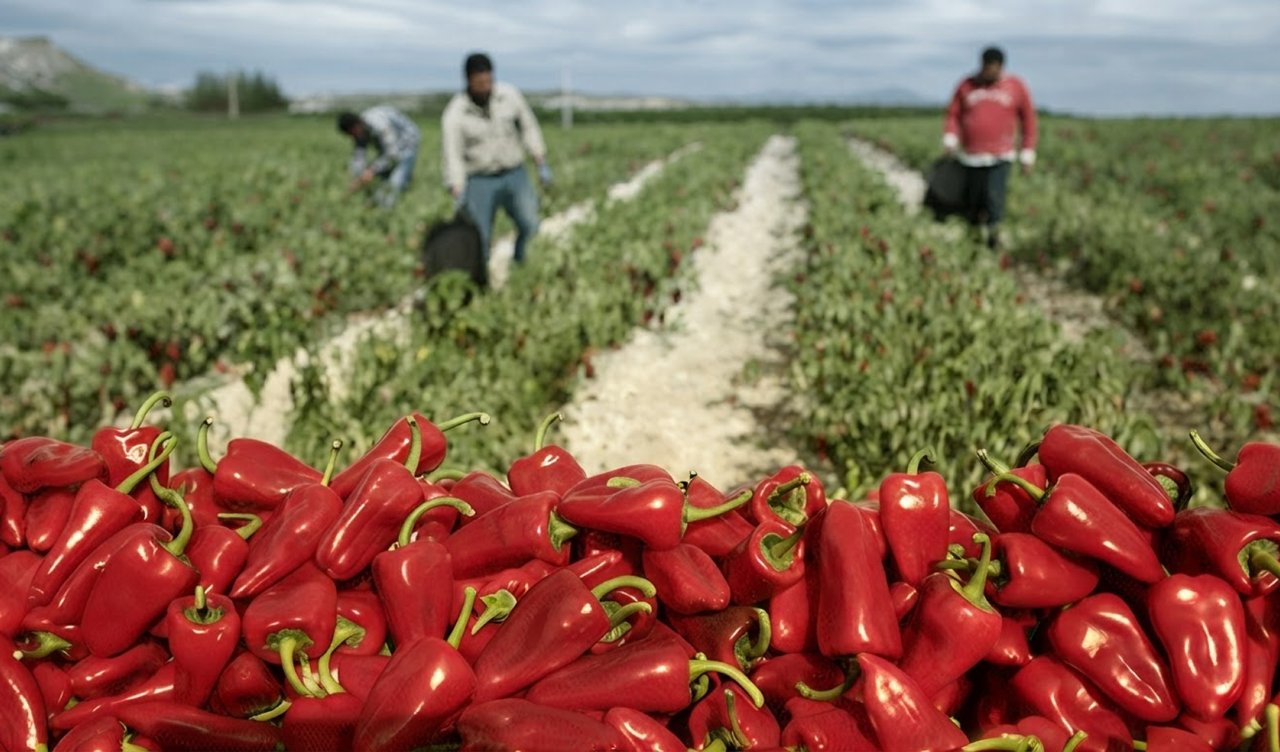
The peppers are planted in late spring and harvesting takes place between September and November. There is no machine casually sweeping through the fields collecting everything in sight. Harvesting is done by hand, in successive passes as the peppers reach the right stage of ripeness.
The fruit itself is rather petite: generally about 8 to 10 centimeters long, vivid red, flat and triangular, with that characteristic little curved tip. Its flesh is fine yet compact.
Charming? Absolutely. But then comes the transformation.
Once the peppers arrive at the processing facility, field impurities are removed and the peppers meet their defining ingredient: “fire”. They are roasted over direct flame.
That direct contact creates the roasted character that makes piquillos so irresistible, but what happens next is perhaps even more remarkable.
They are cored, peeled and cleaned meticulously, one by one. During this process, the peppers are not submerged in water or chemical solutions to make the job easier.
Roasting peppers at home is already a little labor of love. Now imagine peeling and cleaning pepper after pepper without simply rinsing away stubborn bits of skin and seeds.
There is a reason for all that patience. By handling them carefully, their natural flavor and character remain where they belong: in the pepper.
This is Spanish gastronomy at its best: a reminder that great flavor doesn't always come from adding more, but from knowing what to leave untouched. Fire, careful hands and patience do the rest.
Small Pepper, Big Personality
So what does a piquillo actually taste like?
Sweet, yes, but not sugary. There is a roasted depth, delicate acidity and an occasional subtle touch of smoke.
Texture is equally important. The real piquillo is tender, smooth and silky. For me, its greatest quality is balance.
Perhaps that is the wine educator in me speaking, but balance is something I am always looking for—whether in a glass or on a plate. Sweetness without acidity can become tiring. Smoke without freshness can overwhelm. Texture without flavor doesn't give us much reason to take the next bite.
Piquillos bring all of these elements together quietly. And that balance may explain another of their superpowers: they play exceptionally well with others.
Now, Let's Eat
This is where the fun really begins.
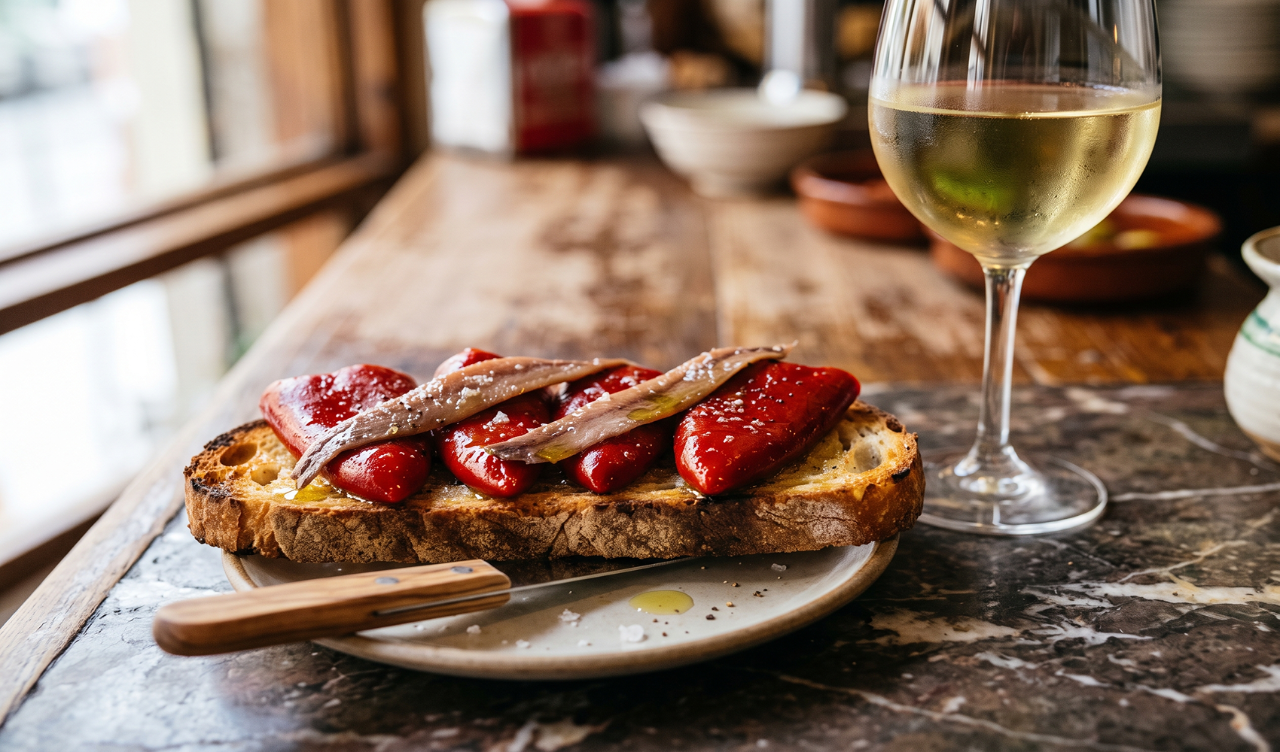
One of the most classic preparations is “pimientos del piquillo rellenos”—stuffed piquillo peppers. Their shape practically invites it. Carefully opened, that little triangular pepper becomes a natural pocket ready to embrace everything from salt cod to tuna, seafood, meat or cheese.
In Navarra and across northern Spain, piquillo peppers are famously stuffed with bacalao, one of the most classic ways to enjoy them. The sweetness and roasted character of the pepper soften the saltiness of the fish, while a creamy filling creates another layer of texture. Add a sauce made from the peppers themselves, garlic and extra virgin olive oil, and suddenly a humble preserved vegetable is dressed for dinner.
But please don't think piquillos require a complicated recipe to deserve a place at your table. Adding them to a simple green or bean salad it is absolutely amazing. Remember, the best way to understand a great ingredient is to do almost nothing to it.
Open the jar. Arrange the peppers on a plate. Add good Spanish extra virgin olive oil and a touch of sea salt. Want to make them even better? Simmer them gently in olive oil with a garlic clove for 5 minutes to awaken their beautiful aroma and flavor even more.
Taste. That’s it.
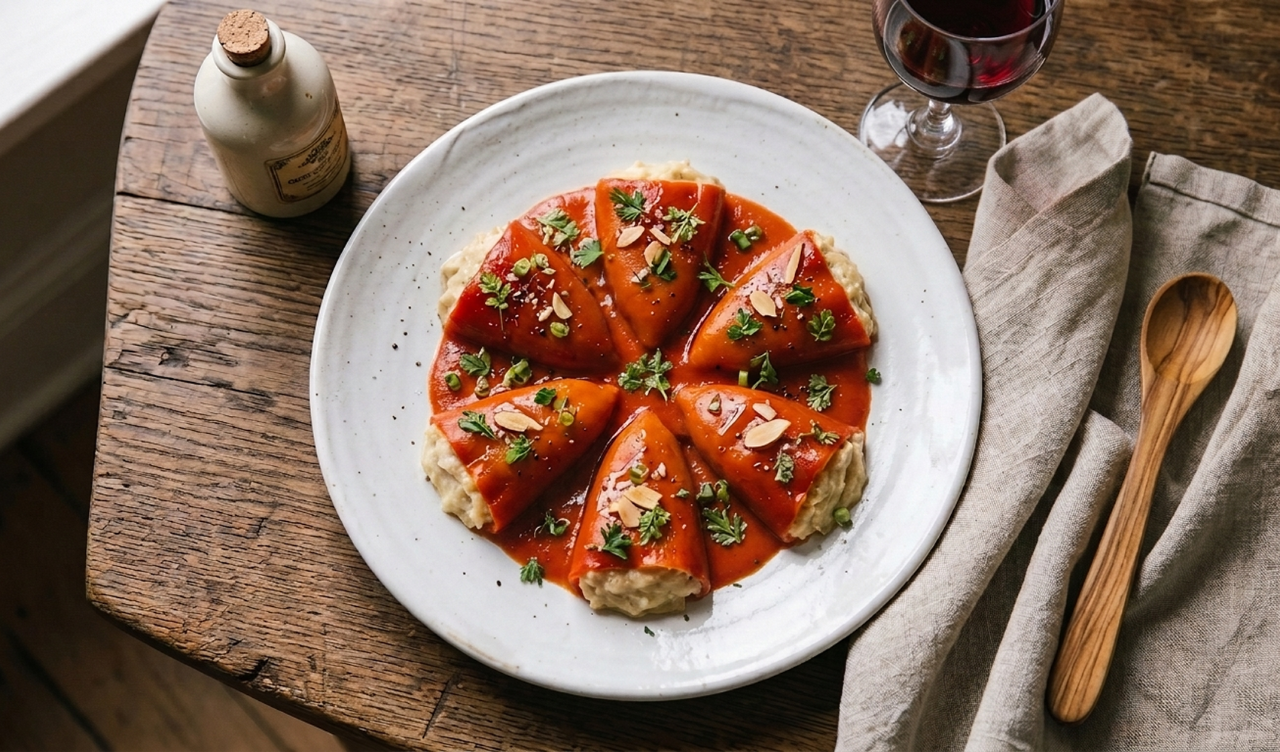
From there, your options multiply quickly. Put them on toasted bread with anchovies. Pair them with tuna or bonito. Serve them beside grilled fish. Add them to a chickpeas puré or combine them with a creamy cheese, such as Torta del Casar, and let the sweetness of the pepper provide contrast. Fold them into eggs with fresh wild asparagus or preserved white asparagus from Navarra, or add them to a traditional “ensaladilla rusa” (potato salad). Layer them into a sandwich or serve them with grilled or roasted meats, poultry or even a meat stew.
Blend them into a sauce and you have color, sweetness and roasted depth almost instantly.
This is why I consider piquillo peppers one of those ingredients every adventurous cook should keep in the pantry. They are unmistakably Spanish while remaining incredibly easy to incorporate into food from almost anywhere.
There is something wonderfully luxurious about opening a jar and discovering that most of the hard work has already been done for you—not by an industrial shortcut, but by someone else's patience.
And Yes, Bring the Wine
Of course I am going to bring wine into this conversation.
The fun part about pairing piquillos is that the pepper itself rarely dictates the entire pairing. Instead, think about what is accompanying—or hiding inside—it.
With piquillos stuffed with salt cod or seafood, I love the idea of a Spanish white with freshness and enough acidity to contrast the sweetness of the pepper and richness of the filling. Think Albariño, a bright Verdejo and even certain wines made from Palomino grape.
Add anchovies or tuna and wines with freshness, minerality or a saline personality can be especially delicious.
Stuff the peppers with meat or serve them alongside grilled lamb, cochinillo, Ibérico pork or a Basque txuletón, and suddenly red wine enters the room. A fresh, juicy Garnacha—or a youthful Rioja or Ribera del Duero with moderate tannin—can complement the roasted flavors without overpowering the pepper’s delicate texture.
Small pepper. Big personality. A great companion any time of the day!
Read the Jar
There is one final detail worth knowing, particularly when shopping outside Spain.
The words “piquillo pepper” alone do not guarantee that you are buying Pimiento del Piquillo de Lodosa PDO.
If you want the protected product, read the label. Look for the Denomination of Origin logo, the numbered counter-label issued by the Regulatory Council and, importantly, the word “Lodosa” in the product name.
It is a small bit of detective work that connects what is in your kitchen to a very specific place, agricultural tradition and production method in Navarra.
And that is part of the pleasure of Spain’s protected products—and the traditions they share with the world.
A Little Red Taste of Spain
Piquillo peppers remind us that extraordinary flavor can come from exactly the opposite philosophy.
Respect the ingredient, the place it comes from, the tradition it carries and the hands behind it. Then let the flavor speak for itself.
Open a jar of piquillos and you have a little taste of Navarra: tradition, flavor and endless possibilities.
Stuff them. Sauce them. Pair them. Invite some cheese to the party. Pour a glass of Spanish wine. Or simply give them a beautiful plate and the attention they deserve.
Small pepper. Big personality.