

Nov 10 2026
Wagyu Beef Ham from León: Great Taste 2026 Supreme Champion
High in the mountains of León, in the village of Geras de Gordón, the Entrepeñas family has been curing meat since 1948. This year, their Wagyu Cecina, entered in the competition as Wagyu Beef Ham, made history at the Great Taste Awards 2026 in London. Having first been awarded three Great Taste stars, the highest rating the competition grants and one achieved by only 306 of the more than 15,000 products entered, it went on to win the Golden Fork from Spain and was then named Supreme Champion, the event’s top honour.
We spoke to Natalia Ordóñez, Quality and Export Manager at Embutidos Entrepeñas and part of the third generation of the family business, about mountain curing, the art of working with Wagyu and why cecina deserves to be known by its own name.
1. You have been producing cured meats in Geras de Gordón for more than seventy years. How did it all begin, which aspects of that tradition do you still uphold today, and how have you evolved?
Our story began in 1948 in Geras de Gordón, in the mountains of León, where we still produce today. We are the third generation of a family that has passed down its craft and its way of understanding the product: choosing well, taking care over every stage of production and knowing how to wait.
We have kept natural curing, light smoking and much of the knowledge we learnt from our elders. We have improved our facilities, quality controls, traceability and formats, and we have also developed products such as our Wagyu Cecina.
Tradition owes a great deal to observation and experience. Technology helps us to understand and control the process more effectively, while preserving what makes our products recognisable.
2. You represent the third generation and are responsible for quality and exports. When did you decide to stay in the family business, and what has changed since you joined?
I grew up closely connected to the company and to my family’s hard work. I am an agricultural engineer, with further training in Food Technology and Food Auditing, and I have an international outlook, both in terms of languages and through my interest in getting to know other markets and ways of working. At Entrepeñas I found the opportunity to bring those two sides together: the technical aspect and an outward-looking perspective.
My contribution focuses on quality and exports. I like to know the product inside out and to help someone who has never heard of cecina understand what makes it special.
We have steadily strengthened our quality processes and built relationships with international customers and distributors. It is a team effort: each generation contributes something and builds on what the previous one created.
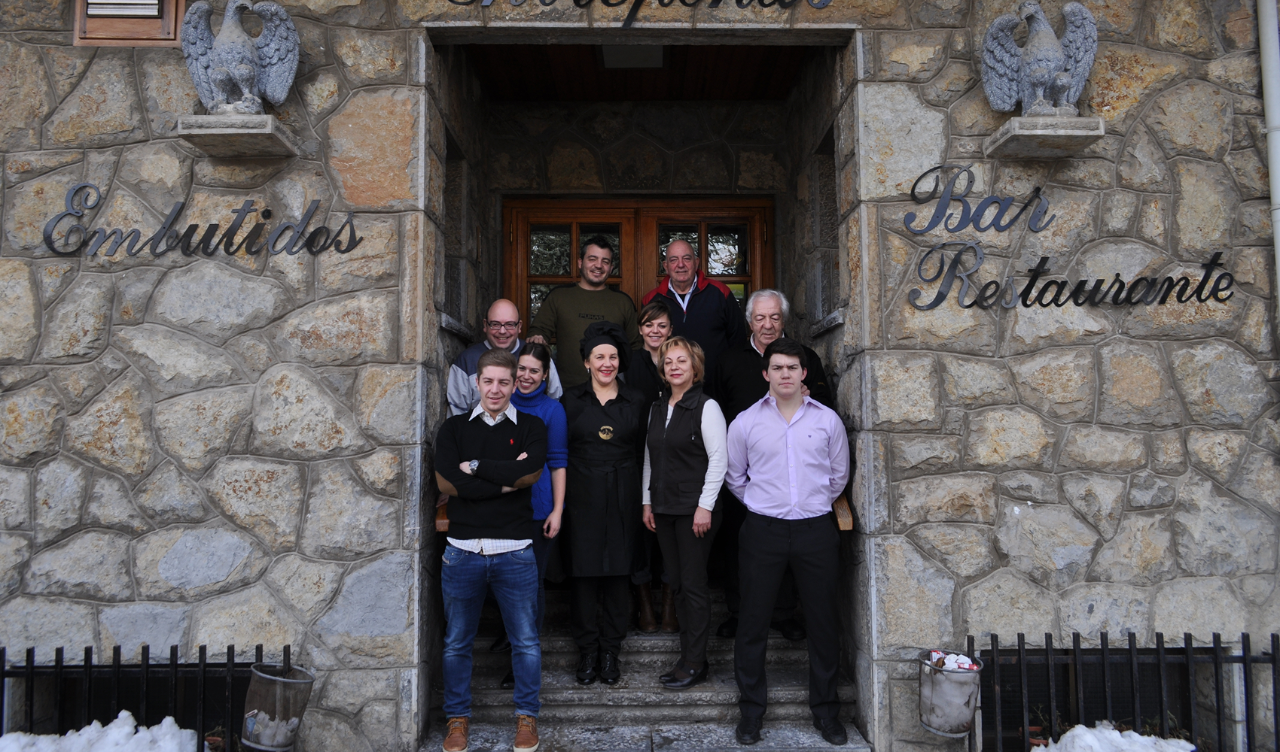
3. You make cecina high in the mountains of León. What does that climate bring to the product?
We are at an altitude of around 1,200 metres, in the Alto Bernesga Biosphere Reserve. The cold and the mountain conditions are part of the way we work, and they allow us to rely on a natural curing process that is closely bound to our surroundings.
It is also essential to understand that climate: knowing when to ventilate, how each piece is developing and when it needs more time. That knowledge has been handed down through generations.
Here, place and craft go hand in hand. For us, Geras is an essential part of the Entrepeñas identity.
4. How did the idea of making a Wagyu Cecina come about? Where do the cattle come from, and what do you look for when selecting the pieces?
We were drawn to the possibility of applying our experience in making cecina to a meat with extraordinary marbling. We wanted to discover how it would transform during curing and what it could bring in terms of flavour and texture.
Wagyu is of Japanese origin, but today it is raised in many countries. Its spread has a curious history: in the 1970s the first bulls arrived in the United States and were crossed with local cattle; later, females arrived too, and lines of entirely Japanese ancestry were developed outside Japan. That is why, today, crossbred animals coexist with fullblood animals, which have never been crossed with other breeds.
We try to work with local producers whenever we find the quality and consistency we need. We also source meat from Australia or Japan, depending on availability and the characteristics of the pieces. We look for balanced marbling, good texture and the right behaviour during curing.
Our contribution lies in transforming that raw material through a craft that is deeply rooted in León. We are delighted that an internationally renowned meat can also become a way to discover cecina and the culinary tradition of our region.
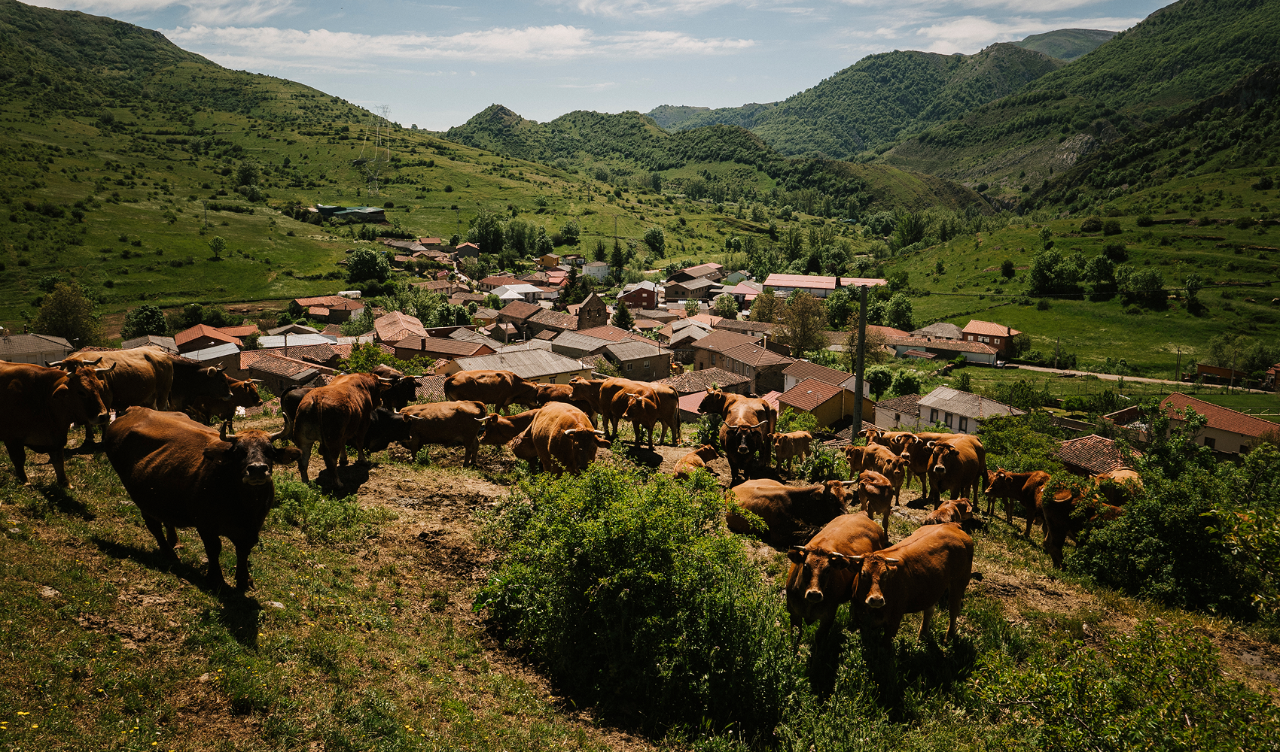
5. Talk us through the process: salting, smoking, drying and curing. What challenges does the intramuscular fat of Wagyu pose?
We begin by selecting and preparing the pieces. Next comes salting, a stage to which we pay particular attention, followed by a resting period to allow the salt to distribute. We give the meat a light touch of smoke using oak or holm oak wood from our local forests, making sure it complements the flavour of the meat without overpowering it. Finally, drying and curing complete the process.
One of our guiding principles is to avoid excessive salting. We carefully adjust the salt and the timing to the characteristics of each piece, always respecting the safety of the process. We want people to appreciate the meat and the nuances of the curing, and we believe we should also accustom the palate to flavours that are not quite so salty.
Curing is slow, lasting a minimum of seven months, and each piece requires individual monitoring. To anyone comparing it with a ham, this may not seem long, but we start with boneless muscle pieces: their structure and size are different, so the timings are not directly comparable.
With Wagyu, the marbling demands particular care to achieve a balance between the curing of the lean meat and the melt-in-the-mouth texture of the fat. That balance is one of the product’s great attractions.
6. How should it be eaten to truly understand it? Which Spanish wine would you serve it with?
In thin slices and at room temperature. Served straight from the fridge, neither the aromas nor the texture of the fat can be appreciated in the same way.
We always recommend tasting the first slice on its own, without adding anything, and letting it reveal itself gradually on the palate. After that, good bread and a glass of wine are all you need.
We would pair it with a Mencía from Bierzo or a Prieto Picudo from León, choosing a well-balanced wine that allows its nuances to be enjoyed. It is a lovely way to discover several products from our region together.
8. What has changed since you received the award at Great Taste 2026?
Above all, visibility. Great Taste has brought the names of Entrepeñas and our cecina to people who may never have heard of us before. For a family business in the mountains of León, that is enormously valuable.
Within the company, it has been a shared joy. We are a team of around thirty people, and behind every piece there is a great deal of work, from production through to the preparation of orders. The recognition belongs to the whole team as well.
It has also given us the opportunity to thank our customers and distributors for their support: they have placed their trust in the product and helped to make it known. In the United Kingdom, Mevalco has played a very important role in that journey.
The award is a source of great excitement for us and brings even greater responsibility: we want everyone who tastes our cecina to find the quality they expect.
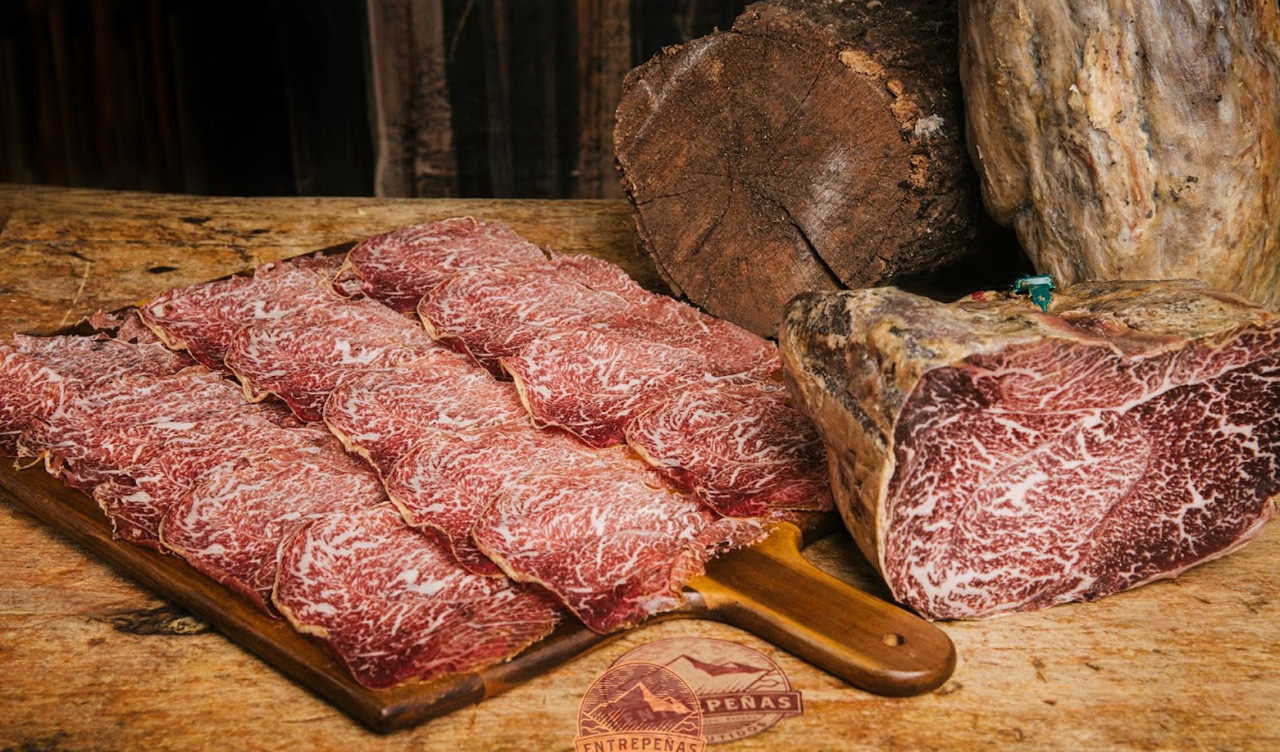
9. Could this recognition open up new commercial opportunities or ease entry into new international markets?
Yes. When you present a little-known product outside its home country, international recognition helps to spark interest and makes buyers more willing to try it.
We see opportunities in hospitality, delicatessens and specialist distribution. We are keen to work with professionals who value the product, know how to present it and help us to build a lasting presence.
The United Kingdom is an important market, given the ground we have already covered there and the impact of the award. We also want to continue developing our presence in France, Belgium and Italy. Our priority is to make the most of this interest through careful planning and by supporting our distributors.
10. Where do you currently sell outside Spain, and how significant are exports? Which market is now your priority?
We sell in the United Kingdom, France, Belgium and Italy, among other destinations. Exports account for approximately 25% of our turnover and are growing.
Exporting is an important part of the future of Entrepeñas. It allows us to diversify and to reach consumers who truly value products with a story and a way of making all of their own.
We now want to consolidate the markets where we are already present, particularly the United Kingdom, and to keep growing alongside our European partners. Rather than adding more countries, we are looking for stable business relationships and distribution that takes good care of the product.
11. ‘Cecina’ is a little-known word outside Spain. How do you explain it to an overseas buyer?
In English, we sometimes use cured beef ham as an initial explanation, because it helps people understand that we are talking about cured beef. However, we prefer to keep the word ‘cecina’: it has a history and an identity of its own, and we want it to be known by its name.
We explain its connection with León, the slow curing, the light smoking and the way it is sliced and served. We also show its versatility, whether enjoyed on its own or used as an ingredient in cooking.
Tasting is usually the decisive moment. A good slice, well cut and at the right temperature, makes everything we have described fall into place.
12. How do you grow without ceasing to be a small mountain business? What are you not prepared to change?
Through planning and by respecting our capacity to do things well. With a long-cured product, decisions are made months in advance. Rising demand cannot dictate when a piece is ready.
We can improve our facilities, organisation and service, but we want to preserve our quality, our production times and our connection with Geras de Gordón.
Growth also means sustaining jobs, passing on the craft and creating opportunities for those who want to live and work in a village. We are excited that cecina is travelling far, and that this journey allows us to keep building a future here.