.png.transform/rendition-xs/image_image%20(1).png "Feder")
Dec 26 2025
DO Cava for NYE and Beyond – Reading the Label
To ring in the new year, the best way to celebrate at midnight is with a bottle of DO Cava. In Spain this pastime is largely upheld, with friends and families waiting for the first strike of midnight before completing the New Year’s tradition – eating a grape for each of the 12 bells at midnight. For the Spanish, this is said to bring luck and prosperity for the coming 12 months of the new year. And to complete the ritual, a toast of DO Cava usually follows with the clinking of glasses spreading cheer and joy for the new year together. If you want to celebrate in a similar style but you’re not sure what to buy, just look for the new label – the marchamo – on the back of the bottle, to give you a better idea of what to expect with your bubbles - you’ll be surprised at what you may find!
That’s because, in January 2022, DO Cava revolutionized their labeling of cava, with a new method of identifying different types of cava, based on zoning and segmentation rules, to ensure quality guarantee and traceability. This labeling system came into full effect in 2023 when the new seals reached their maximum availability on the market. In another ambitious drive, the DO regulatory council set a date that the cavas from the guarda superior age range, would become 100% organic by 2025.
Javier Pagés, president of the DO Cava regulatory council, explained why these were important next steps for the positioning of cava in the marketplace. “These seals represent what sets us apart and identifies us as the authentic Cava with Designation of Origin,” he said. “They offer the highest level of certification, and the only official one that guarantees the quality of the product to the consumer, certifying the authenticity of its characteristics and of the information on the label.”
It is important to note that DO Cava is not limited to the Penedès region alone. The four DO Cava regions in Spain are Comtats de Barcelona (including the Penedès), Ebro Valley near Logroño, Viñedos de Almendralejo in Badajoz, and Requena, located near Valencia.
So if you’d like to know how to understand the bottle, with some examples of what cava to buy, the new labeling of quality tiers found on DO Cava are as follows:
Cava de Guarda (green label) – This is the youngest of the cavas produced, with a minimum of nine months aging, to creating a fruity cava with lively acidity. A classic young cava to mention is also the original pioneer, with the Cordoniu family producing its iconic wine – Anna de Cordoniu, which is a blend of Parellada, Xarel-lo, and Macabeo grape varieties with Chardonnay. In Viñedos de Almendralejo, Bodegas Romale has several options for this, like their Cava Brut and Bodegas Faustino in Ebro Valley also has a collection of cavas ranging from Brut to Semi-Seco.
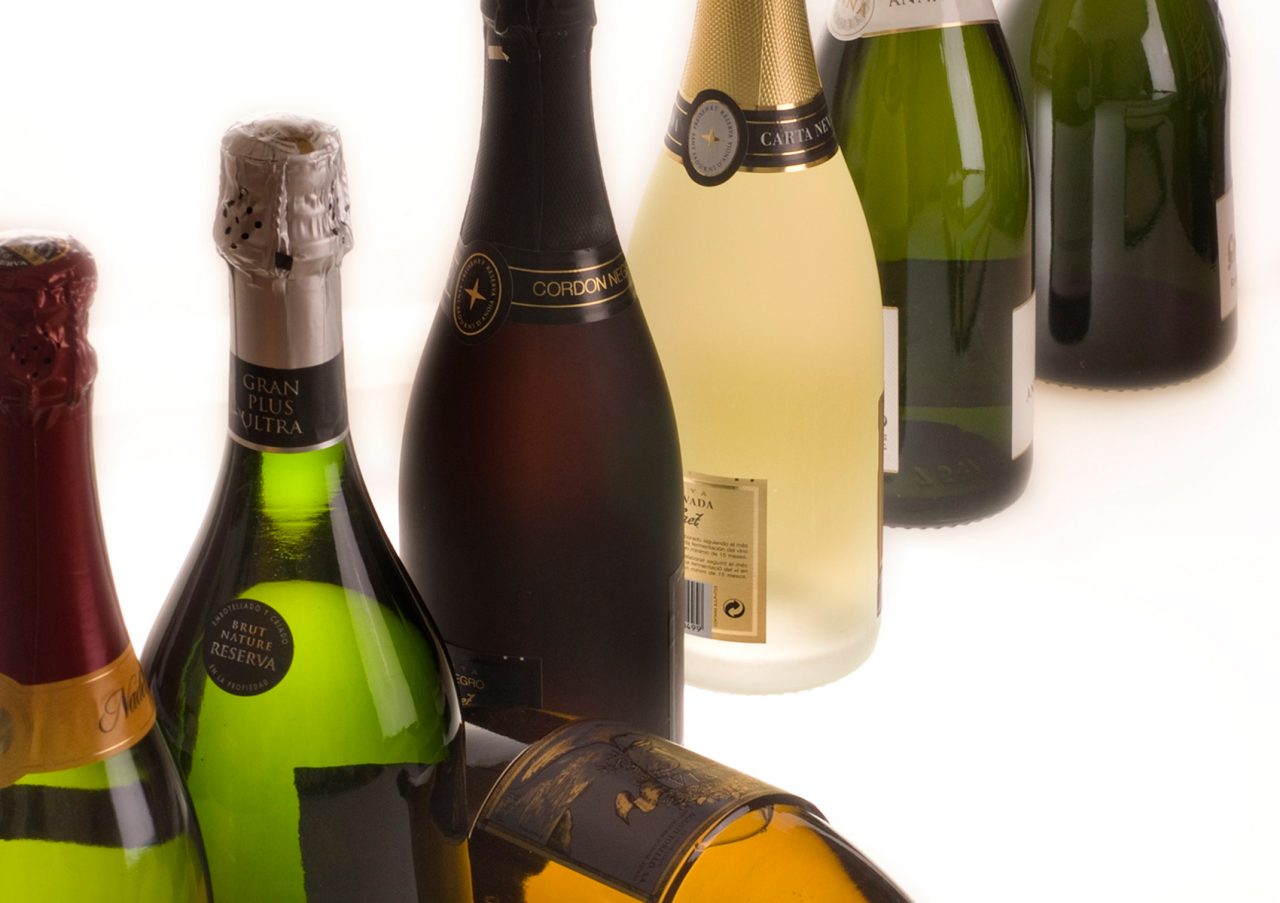
Cava de Guarda Superior, with the sub-categories:
Reserva (silver label) – As it’s the next tier of aging, a reserva cava has a minimum of 18 months in the cellars to reveal a finer palate, with mulled fruit and toasted notes. An interesting reserva cava to try comes from DO Alella – the closest wine region to Barcelona – using the Pansa blanca Varietal along with Macabeu and Parellada, in Parxet Brut Reserva Organic from Alt Alella. In Requena, Dominio de La Vega has a Blanc de Noirs reserva called Cerro Tocón.
Gran Reserva (gold label) – Getting serious in terms of aging, the gran reserva has a minimum 30 months aging, which produces honey tones and nutty nuances along with fine bubbles. A good example of this is the Cuvée Antoni Mascaró by the Mascaró family. With its 60 months aging, this gran reserva cava is a coupage of Parellada, Macabeu and Chardonnay grapes.
Cava de Paraje Calificado (gold rhomboid shape) – This is the highest quality of DO Cava, with stricter regulations and a minimum of 36 months aging, to make exceptional cava from single vineyards. The Juvé & Camps La Capella spends a remarkable 150 months in the cellar and the results speak for themselves – a creamy complex cava of candied fruit, toasted nuts, and truffle.
But these are just a few examples of the variety of DO Cava to choose from. With 70% of its product sold internationally, surprisingly this is the DO from Spain with the biggest export – its big buyers being Germany, USA, Belgium, UK, Sweden, and Japan. DO Cava is highly regarded around the world for its harmonious pairing possibilities, making it a fabulous wine option all year round. As food for thought, some Michelin star chefs suggest pairing cava de guarda with the likes of Asian cooking, a reserva cava with smoked fish, or a gran reserva with slow cooked beef. Depending on what’s on the label, DO Cava is a versatile option for all occasions.
So, while browsing for bottles of cava, there is usually a lot to choose from. To make the process more knowledgeable – and fun! – the new marchamo labels also feature a QR code with unique information for each and every wine. That means consumers can get in-depth information about the origin, tasting notes and, on occasion, even pairing suggestions for the cava.
Whatever DO Cava you choose for New Year’s Eve and beyond, make sure you enjoy it in good company and with your favorite sharing dishes. Cheers and Happy 2026!
RELATED ARTICLES