.png.transform/rendition-xs/image_image%20(1).png "Feder")
Oct 06 2026
Percebes: Spain’s Highly-Prized Seafood Delicacy
Galicia is known for its exceptional seafood. The Atlantic waters that lash against the region’s rugged coastline are teeming with everything from mejillones (mussels) and almejas (clams) to vieiras (scallops) and pulpo (octopus). Yet perhaps the most iconic of all Galician seafood are the famous percebes.
Often costing in excess of €200 per kg, percebes are among the most expensive seafood items in the world. We look into what makes these rather odd-looking delicacies so beloved in Galicia and sought-after by top chefs around the world.
What Exactly Are Percebes?
Percebes, known in English as ‘goose barnacles’ or ‘gooseneck barnacles’, are one of Spain’s most cherished seafood delicacies. With an unmistakable appearance – their unique ‘prehistoric’ exterior resembles a dinosaur claw – and a uniquely intense flavor, percebes were once considered ‘peasant food’, favored by the fishermen who plied their trade along the Atlantic coastline. Yet today, you’ll find them on high-tier menus throughout the region and beyond, selling for upwards of €80 for a small portion.
Why Are Percebes So Highly-Prized?
There’s high risk and high reward when it comes to harvesting these weird and wonderful little marine morsels. Percebes attach themselves to sea-battered rocks. They are impossible to farm and can only be found in the nutrient-rich Atlantic waters along the coast of the Iberian Peninsula.
Every percebe is hand-collected by percebeiros. These are brave fishermen who abseil down wave-battered rockfaces or swim out to rocks when the tide recedes. With only a short window until the tide comes in, percebeiros risk their lives to collect these ocean treasures, using a sharp iron bar to lever the base of the percebes and collecting them in a special pouch tied around their waist.
One of the most popular places to collect percebes is Galicia’s Costa da Morte, which translates as the ‘coast of death’. It’s an apt, if rather macabre, name for a coastline that claims the lives of an average of five percebeiros each year.
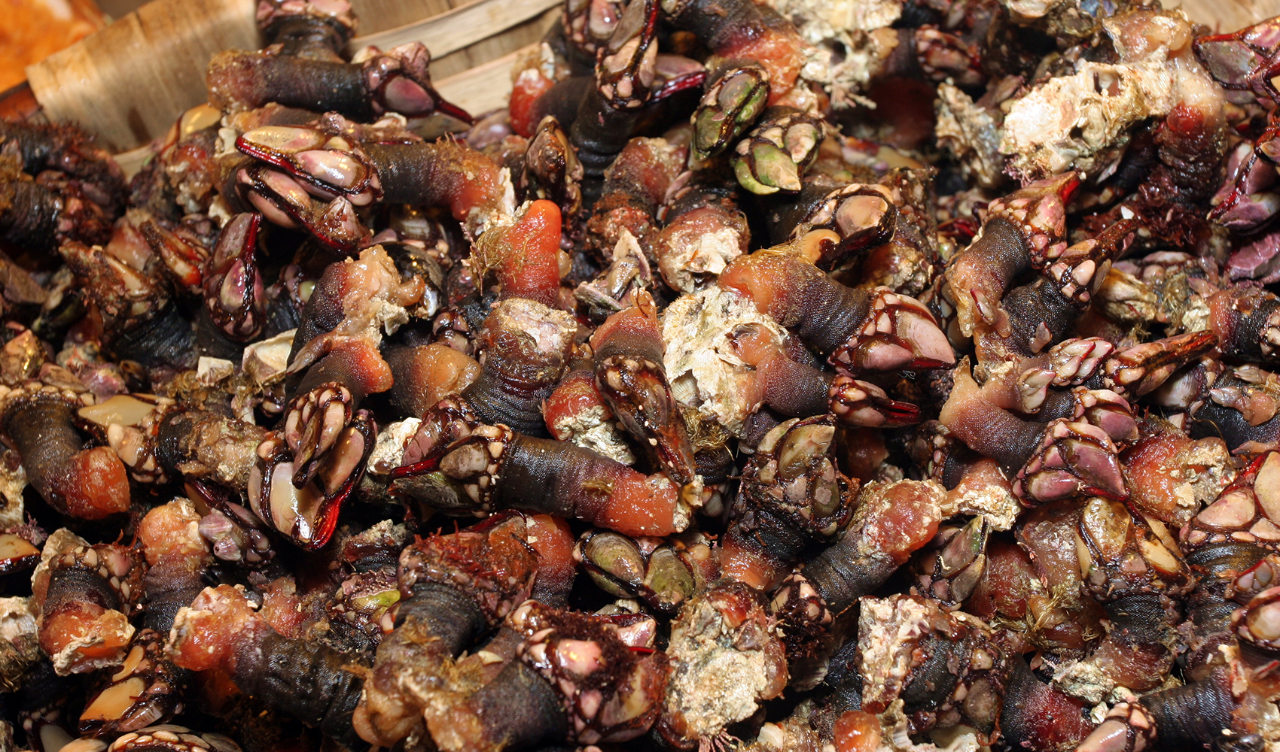
Spanish Percebes: A Flavor Like No Other
Beyond the skill and danger involved in harvesting Spanish percebes, their exceptional reputation also comes from their distinctive flavor.
Percebes from different regions can vary significantly in size, texture and intensity. Galician percebes are particularly prized for their firm texture and pronounced taste of the sea, characteristics traditionally associated with the cold, wave-exposed waters and rocky shores where they grow.
Percebes from Morocco and other regions may share the same species or belong to closely related species, but differences in habitat, substrate and growing conditions can influence their characteristics and culinary profile
Often described as a cross between a lobster and a clam, Spanish percebes taste of pure ocean – rich, with a natural salinity immediately reminiscent of the Atlantic Ocean. It’s this environment of turbulent, mineral-rich seas with an abundance of plankton, rugged rocks, and wild winds that shape the taste and texture of this unique seafood. There’s no fishy or seafood aroma – just an intense, pure, and briny ocean flavor. The texture is taut and snaps upon a single bite, releasing the heavenly taste of minerality and salinity – the finest expression of marine gastronomy in one blissful moment.
Like much of Spain’s gastronomic offering, the beauty of percebes lies in their simplicity. They don’t require any complex preparation or culinary wizardry. Just the patience and presence of mind to enable their natural qualities to shine through.
How to Enjoy Percebes
Percebes are best boiled in salted water. The traditional Galician way is to use seawater, but nowadays it's typical to replicate the saltiness of seawater, using 35g of salt per liter of water.
Bring two liters of water to a rolling boil, then add a 1kg of percebes (adjust accordingly, sticking to this ratio). Wait until the water returns to a rolling boil. After 30 seconds to a minute, you should notice the barnacles starting to open. Now they are ready to be removed from the water.
It’s best to eat them immediately while they’re still warm. You can even cover them with a cloth or tea towel to keep them warm and moist before serving. To peel them, pinch the ‘claw’ end between the thumb and forefinger of one hand, using the other hand to peel the scaly outer layer away, revealing the deliciously tender, meaty interior.
They say, “What grows together, goes together.” So, pair with a cold Albariño or Godello white wine from DO Rías Baixas. The light-bodied character and stone-fruit aromas of these Galician wines just accentuate the briny, oceanic flavors, while the acidity acts like a squeeze of lemon, bringing a fresh zestiness to the palate.
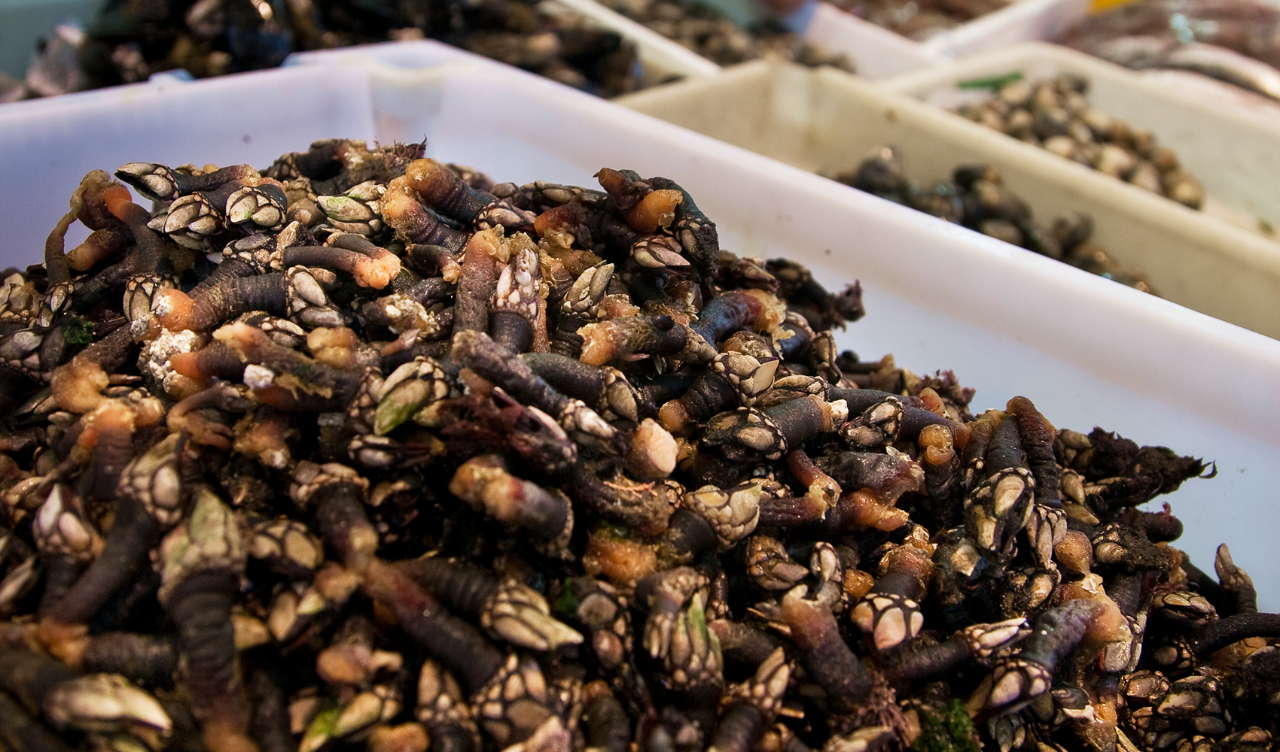
Enjoying Percebes Outside of Spain All Year Round
Spain has mastered the art of preserved seafood. Premium gourmet conservas capture the essence of Galicia’s Atlantic coast, providing a taste of some of the very best seafood in the world. You can purchase high-quality Spanish conservas from specialty stores.
The FWS Colmados from Spain Certification Program recognizes the best food stores outside of Spain. These food specialists import authentic products from Spain, and the certification guarantees the highest quality. Preserved percebes from Spain are sourced directly from Galician fishermen, with each tinned conserve meeting meticulous preparation standards.
Colmados such as La Tienda (U.S.) and Spanish Pig (Canada) sell tinned percebes from Galicia. La Tienda stocks percebes by Conservas de Cambados, sourced from Galician fishermen and carefully hand-prepared to the highest standards. You can search for your nearest Colmado here.
To best enjoy tinned percebes, submerge the tin in a water bath (a bain-marie, or baño maría in Spanish). Place the tin unopened in a pot of very hot water for 3-5 minutes before opening. And don’t forget to pair your percebes with a cool glass of Albariño or Godello, along with some freshly baked bread.