
.png.transform/rendition-xs/image_image%20(1).png "Feder")
Feb 10 2026
BBQs Aren’t Just for Summer: Grilling and Chilling With a Spanish-Style Barbeque
Smoky flavors, succulent sauces, fine wines and great company. The essential elements of a barbecue make this typically summertime activity far too good to be confined to the warmer months of the year.
In Spain, the temperate climate allows for comfortable outdoor cooking all year round. And in some parts of the country, a winter barbecue is a time-honoured tradition, preferred to the scorching hot days of summer.
That flame-grilled flavor can be achieved at any time of year. So, take a leaf out of the Spanish barbecue playbook and enjoy an Iberian feast. Here’s how to capture the magic of a Spanish barbacoa!
Starters
Any rustic Spanish feast should begin with pan con tomate. This simple dish is a staple of Spanish cuisine and makes for the ideal starter for a barbecue. Always use fresh bread, lightly toasted, and begin by rubbing a halved garlic clove over the surface of the bread to infuse that wonderful aroma. Next, cut a fresh, ripe tomato and rub it fleshside down onto the bread. Then comes a drizzle of Spanish Extra Virgin Olive Oil and a pinch of Spanish sea salt. A plate of acorn-fed Jamon Ibérico is always a welcome addition.
Once you’ve got the coals firing, add some vegetables to the grill. Barbecuing vegetables brings out a wonderful natural sweetness and enhances their flavor, adding smoky undertones with caramelization. What’s more, many vegetables contain a natural layer of protection, enabling the inside to become tender and rich.
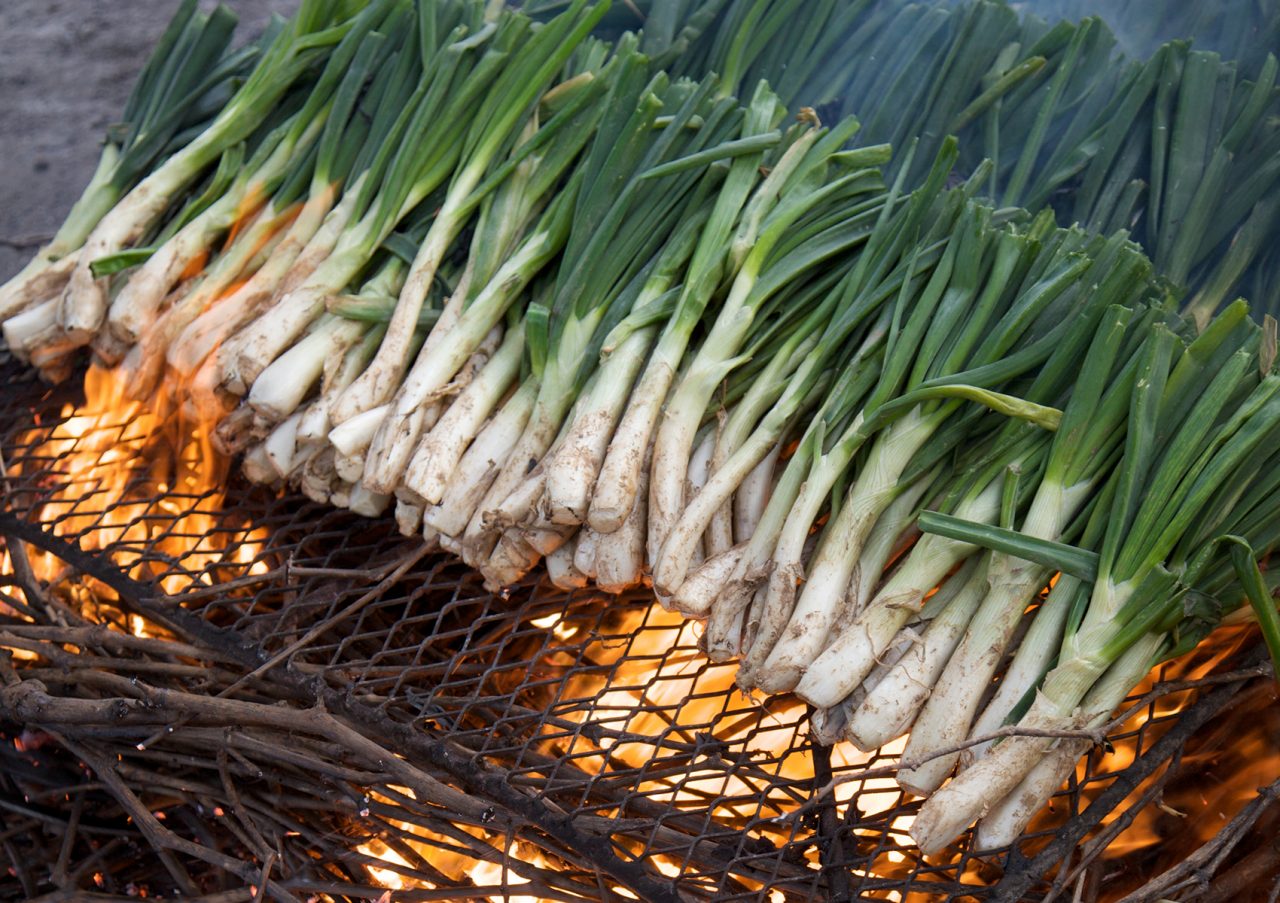
In the north-east region of Catalonia, large green onions known as calçots are a barbecue standard, typically served with romesco, a delicious sauce made with tomatoes, almonds, hazelnuts, stale bread, olive oil, garlic, and ñora peppers. Use green onions, leeks or any other kind of root vegetable that’s in season.
Make the most of whole, coal-roasted vegetables by placing them directly on the embers – eggplants, tomatoes, bell peppers, artichokes, and potatoes are all good options.
Serve your coal-roasted potatoes with mojo rojo, a richly flavored Canary Island sauce made from pepper, garlic, cumin, olive oil, vinegar, and salt. Add Pimentón de la Vera (Spanish paprika) for a little extra smokiness. You could also use salsa brava – the famous Spanish sauce made from ham stock and flavored with guindilla pepper, usually served with patatas bravas.
Mains
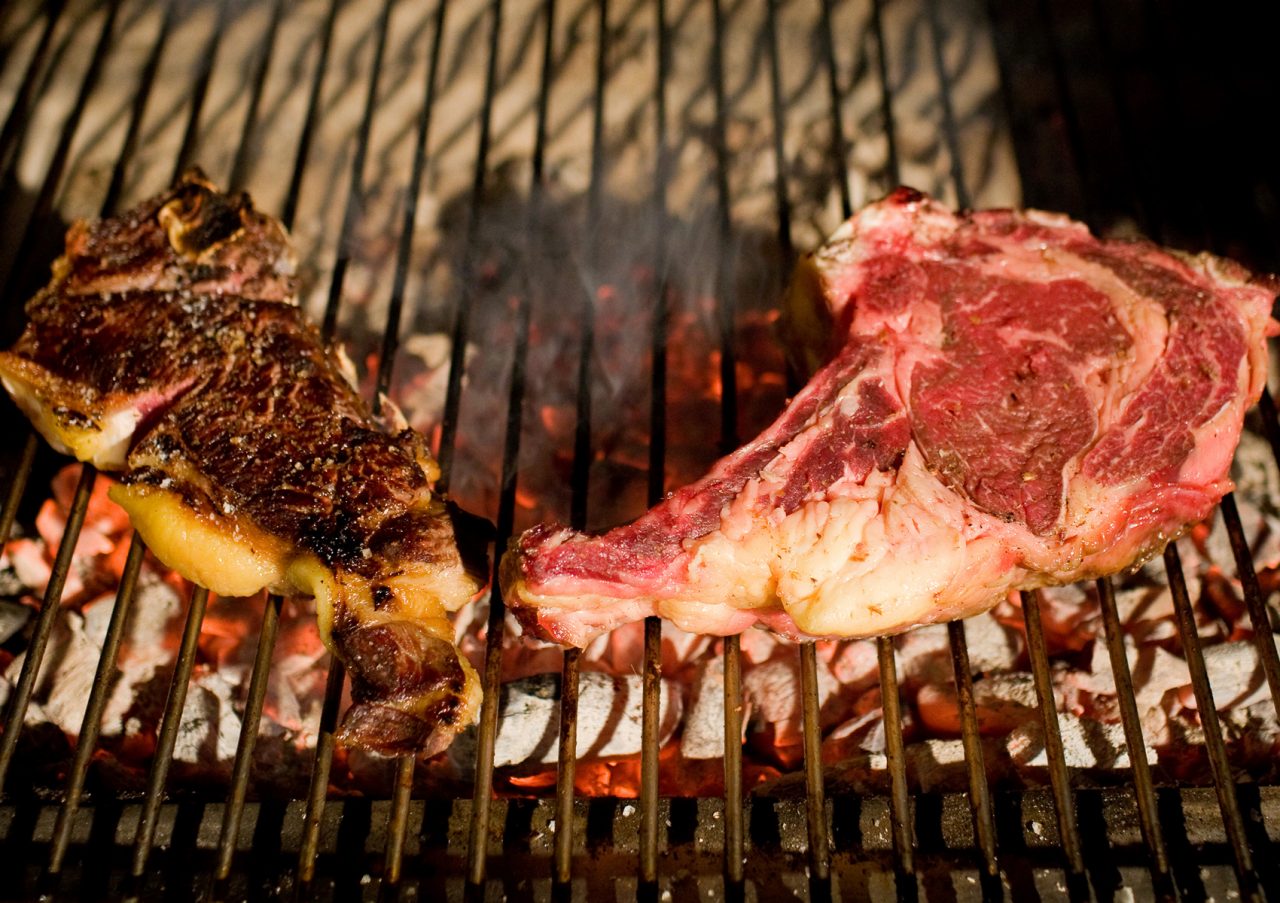
Like every good cookout, a Spanish barbecue is primarily a meat feast. Typical cuts include chuletas de cordero (lamp chops, often Cordero Manchego or Cordero de Navarra), lomo de cerdo (pork loin), contramuslos de pollo (chicken thighs), and costillas (ribs). Along with Spanish sausages like butifarra, these meats are often served with alioli, a cold sauce made up of an emulsion of Extra Virgin Olive Oil, and garlic.
Add cured sausages, including fuet, morcilla, Ibérico salchichón, and the ever-popular chorizo. For a Spanish-style marinade to impact extra flavor and make sure your meat is tender and delicious, blend minced garlic cloves, Pimentón de la Vera, brown sugar, Extra Virgin Olive Oil, black pepper, and a pinch of sea salt.
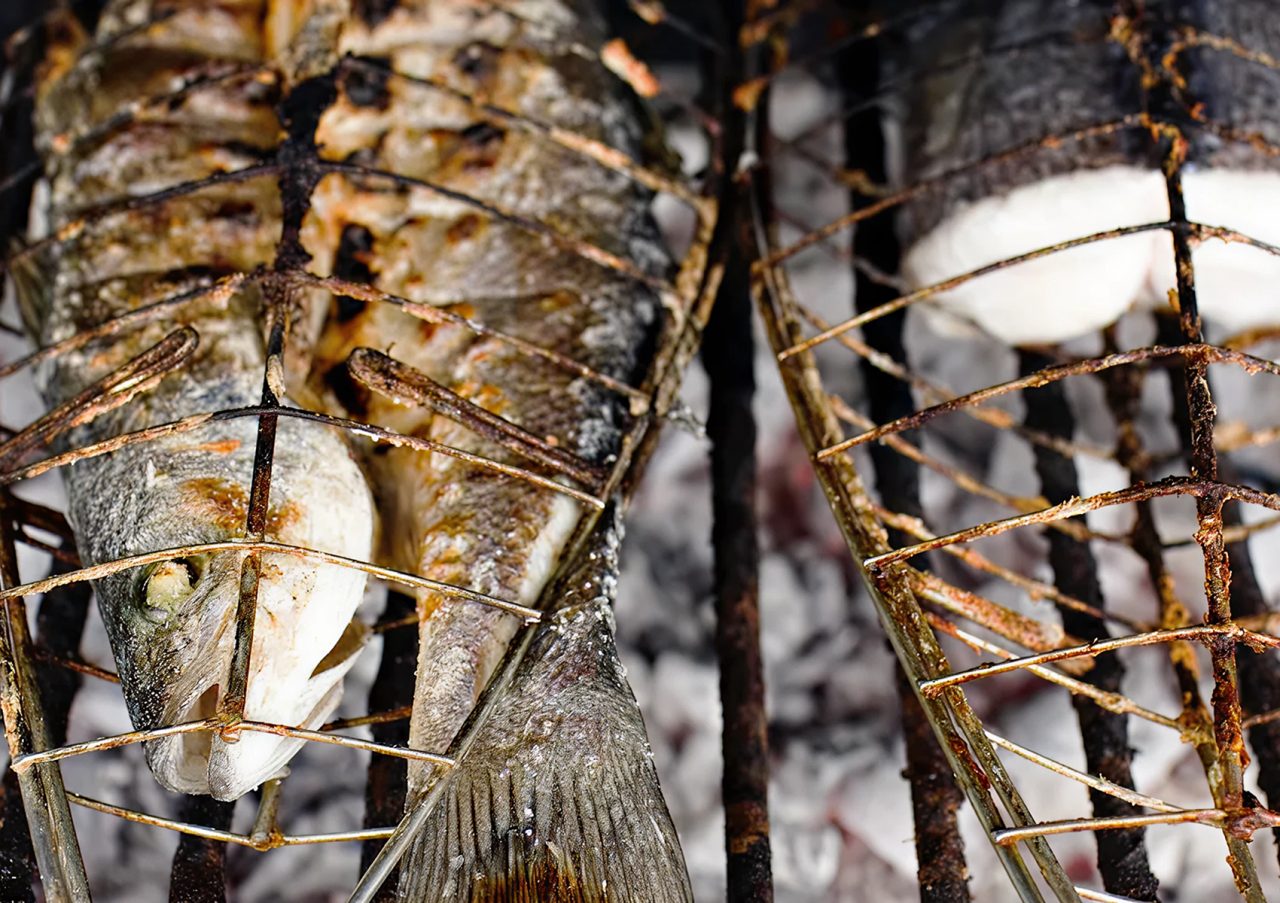
Grilled fish is another excellent option – always lightly seasoned and brushed with Extra Virgin Olive Oil. Sardines, sea bass, sea bream, turbot, and tuna belly are all popular. Add a drizzle of lemon before serving.
Of course, seafood also plays a starring-role in Spanish gastronomy, from humble barbecues all the way up to Michelin-starred kitchens. Fresh grilled shrimp is a quick, easy, and delicious seafood addition to your Spanish-style barbecue – serve with alioli on the side and a sprinkle of Pimentón de la Vera (Spanish paprika).
Dessert
Barbecuing fruit intensifies the natural sweetness while adding a delicious depth of smoky, caramelized flavor. Cut larger fruits into thick slices or chunks and place directly onto the grill on a medium high heat. Smaller fruits can be cut in half, pitted, and grilled cut-side down.
Oranges, clementines, persimmon and grapefruit all caramelize well when barbecued. Canary Island bananas are also delicious on a barbecue, either grilled directly in their skins or loosely wrapped in tin foil. Be sure to pick fruit that’s ripe but firm. Serve your barbecued fruit with a drizzle of Spanish honey.
Another way to serve your caramelized fruit is on skewers. Roll them in ground Marcona almonds for an authentic taste of Spain.
Perfect wines for a Spanish-style barbecue
When finding the perfect wine to pair with dishes that are served with sauce, the golden rule is to always pair to the sauce.
For instance, the nutty, smoky, and slightly sweet flavor of romesco sings when paired with the minerality of a Catalan DO Montsant or DO Priorat wine, both of which are native to the same region as the sauce.
To complement mojo rojo with vegetables, opt for an indigenous DO Canary Islands red wine. The volcanic minerality and bold fruitiness harmonize perfectly with the earthiness of mojo rojo.
For red meats such as beef, lamb and pork, choose full-bodied reds. Cabernet Sauvignon, Malbec, Mencía, and Syrah are all smooth-tannin, robust wines that complement smoky flavors and help to soften the astringency of fatty meat. DO Rioja, DO Bierzo, and DO Ribera del Duero are Spanish regions renowned for creating bold, full-bodied reds.
For barbecued poultry, look to light reds such as Merlot and Pinot Noir, or full-bodied whites such as Sauvignon Blanc, and Chardonnay. They bring balance and fruitiness that complements the smoky flavor of barbecued chicken or turkey, without being overpowering. A fruity, zesty Albariño from DO Rías Baixas is the perfect pairing for fish or vegetable dishes.
For a heavenly dessert pairing, the Andalusian DO Málaga’s sweet Moscatel brings intense aromas of fig and stewed fruit with floral notes, while DO Condado de Huelva’s orange wines bring complex, fresh flavors. You could even opt for a Jerez-Xérès-Sherry, with rich fruit flavors and nutty undertones that harmonize beautifully with caramelized fruit.
RELATED ARTICLES
RELATED NEWS